
ShadowsPapa
Well-Known Member
- First Name
- Bill
- Joined
- Oct 12, 2019
- Threads
- 249
- Messages
- 40,529
- Reaction score
- 54,151
- Location
- Runnells, Iowa
- Vehicle(s)
- '25 JTMX, '23 JLU 4xe, '82 SX4, '73 Javelin
- Occupation
- Retired auto mechanic, frmr gov't ntwrk security admin
- Vehicle Showcase
- 3
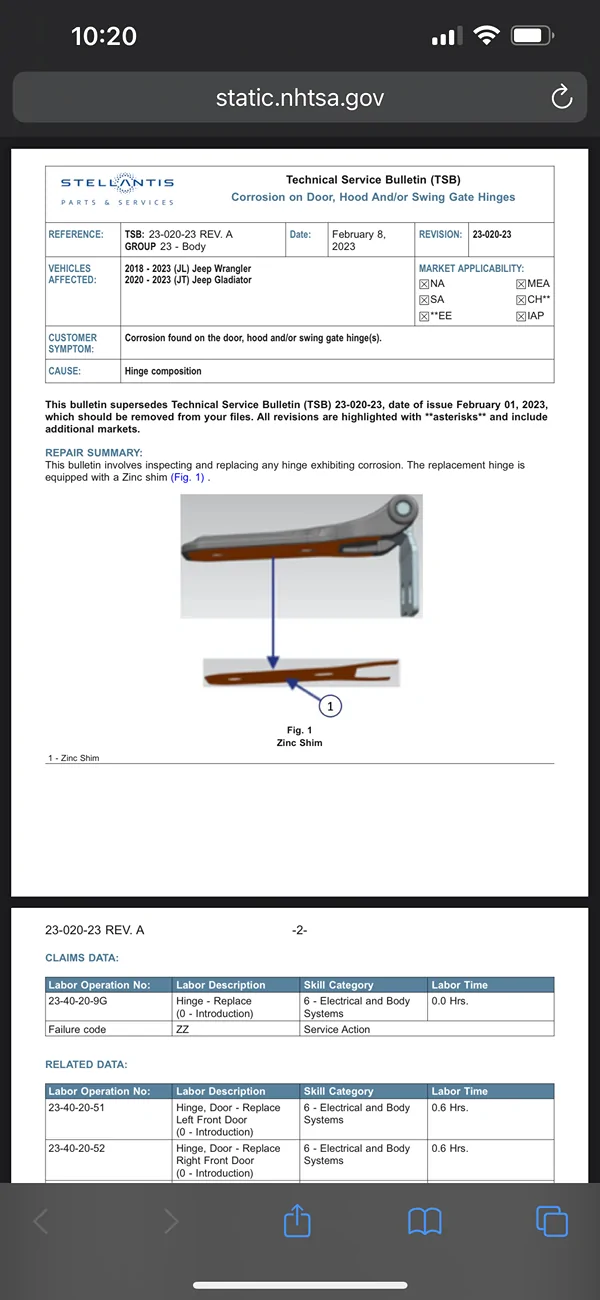
Random thoughts.......The hinge's zinc shims are insulated from the hinge itself, there is no electrical contact between the hinge and the shim. The shims are only sacrificial for the door and only when installed against bare aluminum. When my dealer does the corrosion repair, since both the door and shim get painted, I doubt that the shims are sacrificial at all.
The shims are not available as a separate part and because they are adhered to the hinge, they will have to be replaced with the hinge.
that fits with the idea that the issue is the bare aluminum being exposed to air and moisture if there's any break in the paint surface between the parts. Ideally, the paint seals that sandwich and there's never a chance of any problem. However, there are many aluminum parts, like the bumpers on my cars, that aren't problematic even if the paint is chipped or nicked.
But the bubbling on the hinge is another thing altogether.
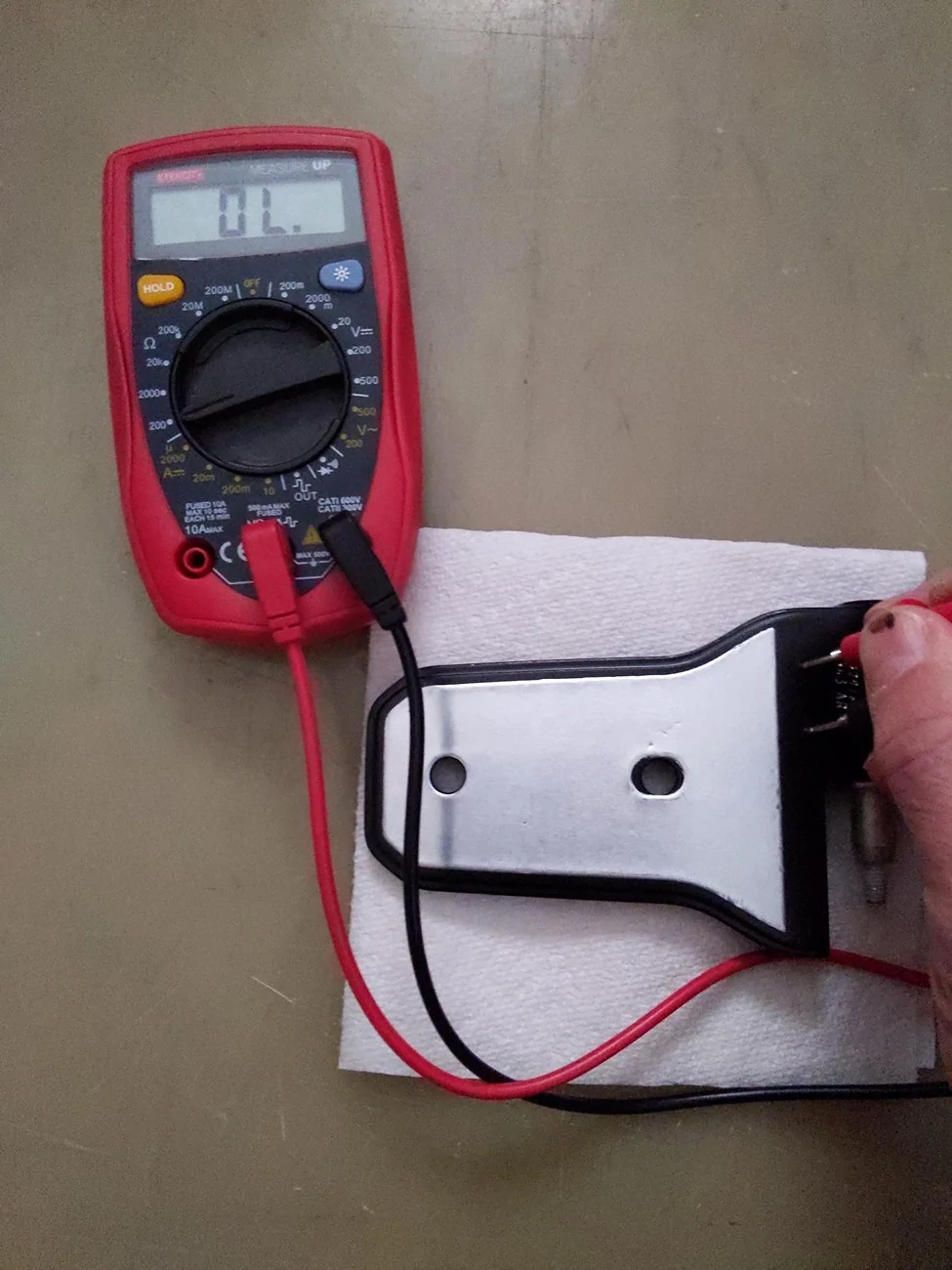
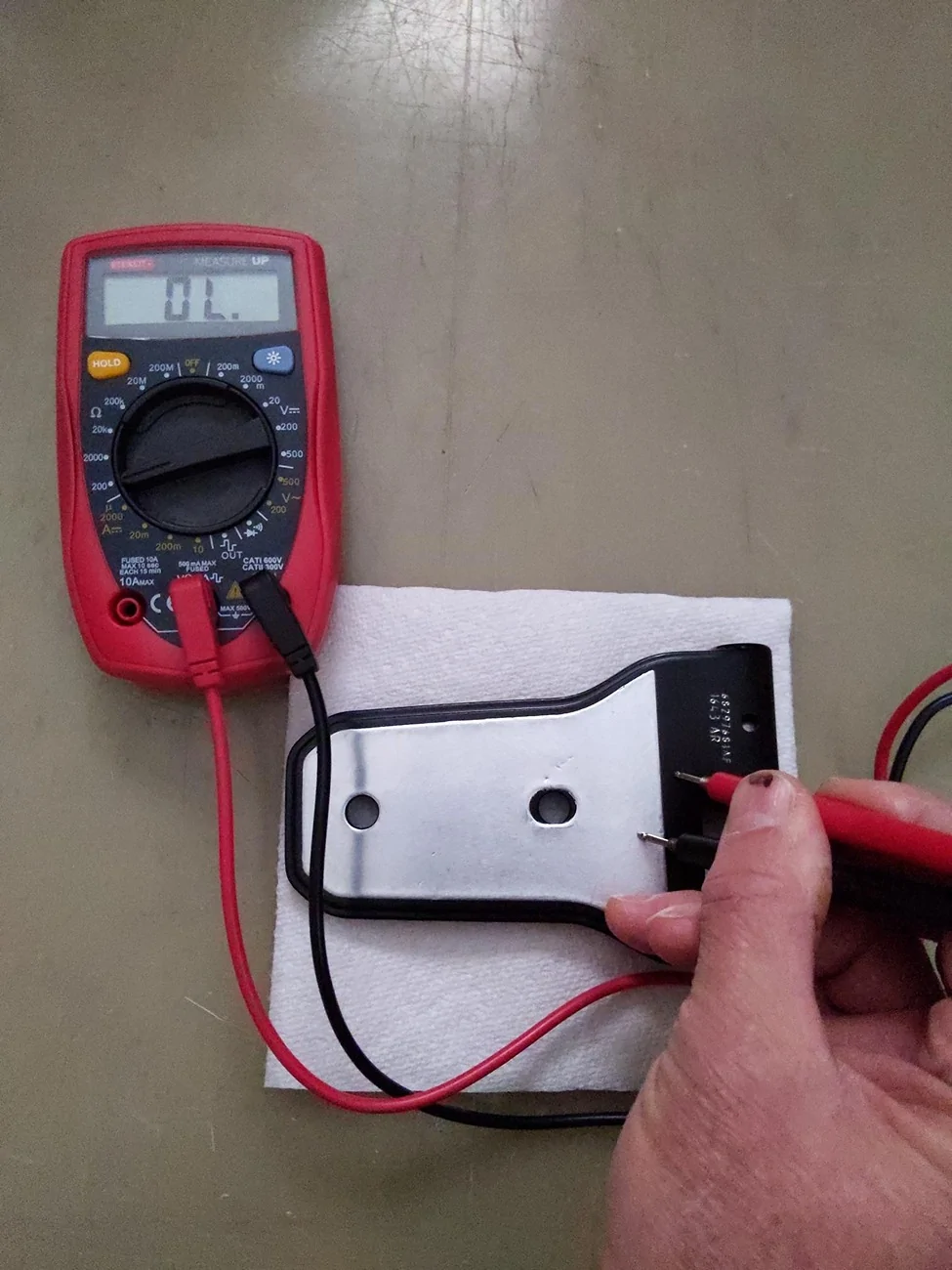
How is the zinc insulated from the hinge? a plastic gasket of some sort?
The adhesive? Which would have to be a bit special in itself to act as insulation, and be absolutely complete coverage, never allowing the two to touch or close to it.
Zinc is a soft metal - I can see it being a gasket of sorts all by itself, helping to seal the aluminum surface if the surface of the zinc was very smooth. If properly painted where the paint sealed the edge of the zinc, then there is no chance of a problem. If the paint seal at the edge was broken, then the zinc would become sacrificial.
Sponsored