mikemwj2000
Member
- Thread starter
- #16
I'll look again - thanksHmm... not for Rubicons.
The internet never lies!!!
Mine's about 1000# before any of my additions.
Sponsored

I'll look again - thanksHmm... not for Rubicons.
The internet never lies!!!
Mine's about 1000# before any of my additions.
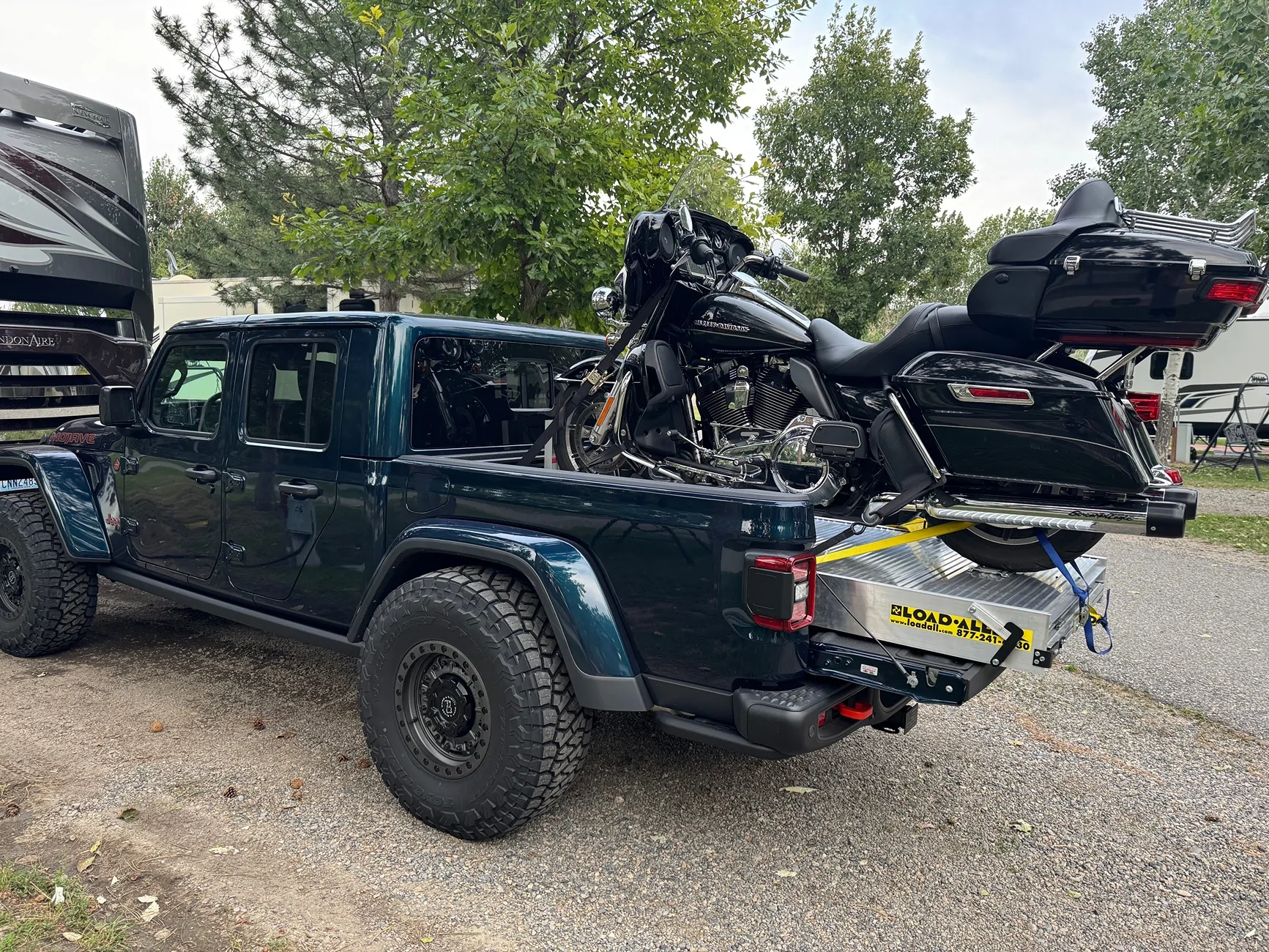
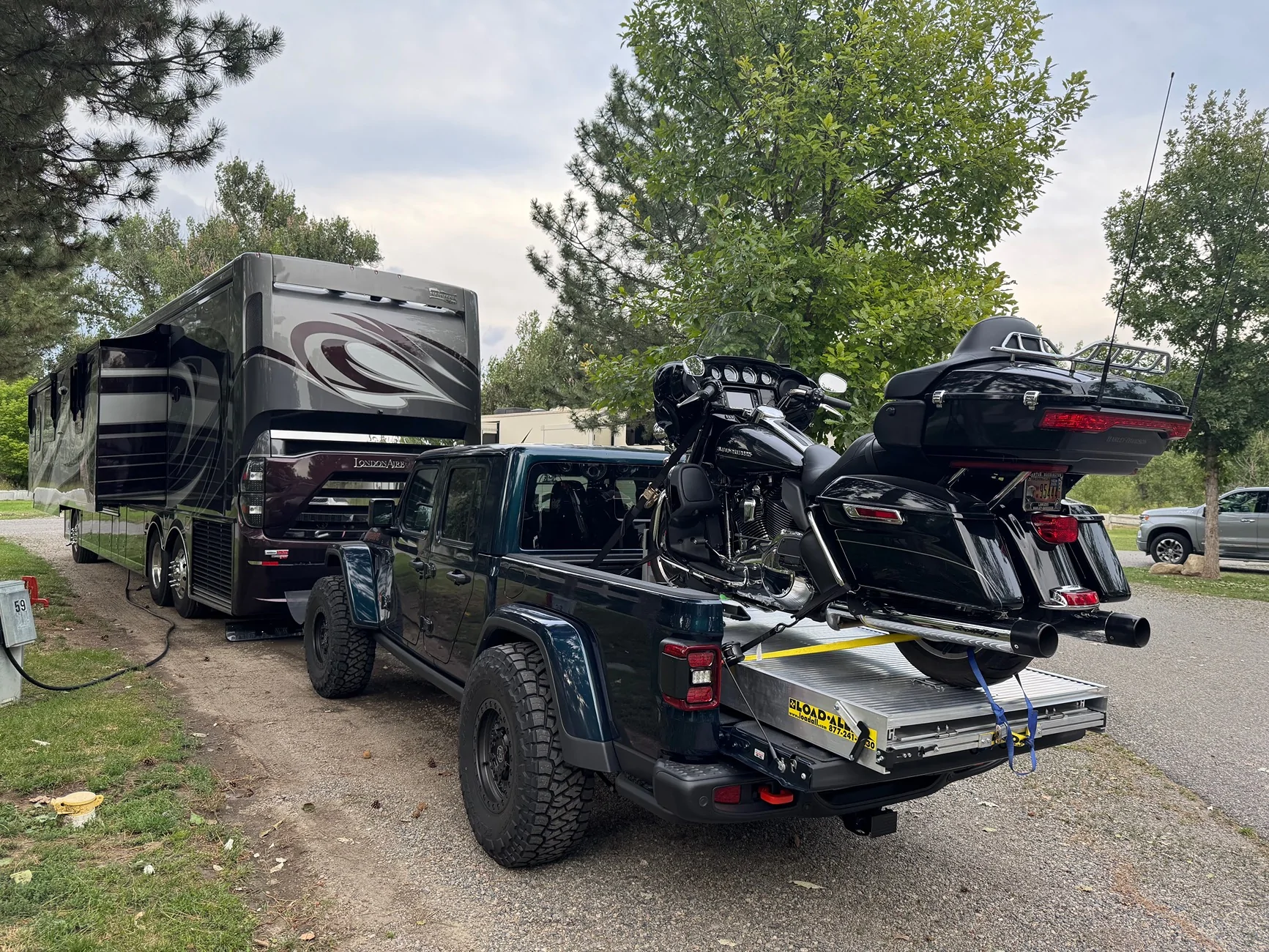
That was the original plan, to install a bike lift on the RV and tow the jeep. We came across this at Sturgis and like the versatility and that fact it's not permanently attached to RV so we also have the option of taking only the bike and truck. But of course, don’t trust the salesman that it will work perfectly with our Rubicon and an extender.What about a carrier that hooks to the motorhome, and then set up the flat tow of the Rubicon?
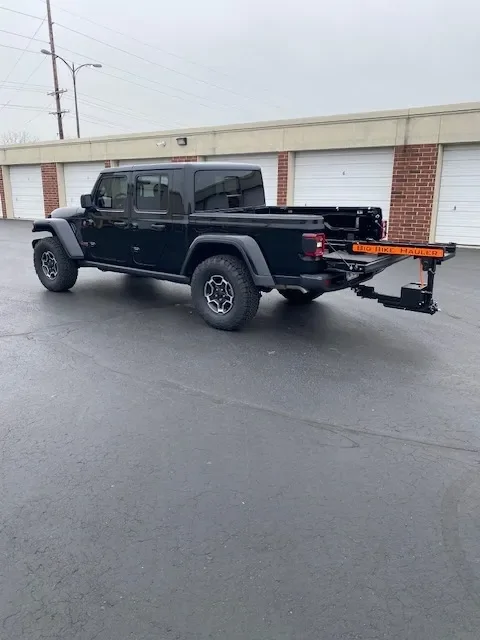
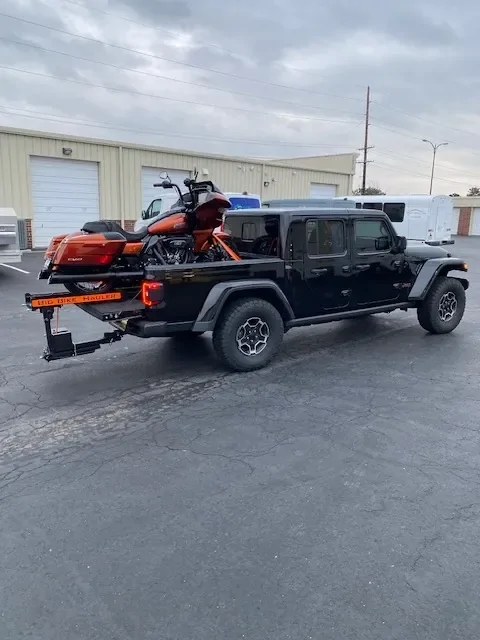

I kept track, or tried to, of what I added to my Overlands (2020 and 2022) as far as tailgate ladder, power steps, bumper and winch and figured those against my payload (minus the weight of the factory running boards and bumper)Hmm... not for Rubicons.
The internet never lies!!!
Mine's about 1000# before any of my additions.
Matches my thinking/musings.That looks like it'd pick the nose up considerably, which would take a lot of weight off the tow bar. I could see that making the front end getting squirrelly being flat towed
Sales people make money when they sell stuff............ not always the best sources of good information. Some, yes, some, no.That was the original plan, to install a bike lift on the RV and tow the jeep. We came across this at Sturgis and like the versatility and that fact it's not permanently attached to RV so we also have the option of taking only the bike and truck. But of course, don’t trust the salesman that it will work perfectly with our Rubicon and an extender.
They take the GVWR minus Curb Weight to get payload. It's a static number, calculated.I'm going to throw my $.02 in.
The payload on the truck does NOT count in this example.
The payload for the truck is found by combining brake strength and cooling capacity of the JT. Neither will be used in this instance, it's all on the tow vehicle.
Yes, I know some brake enabler has to be used on the JT while towing it, but just like trailer brakes, the tow vehicle is responsible for more braking power than the toad.
So, to correct the sag you're probably going to get from the weight, either air bags in the coils or something like a SuperSpring would probably do you some good.
Part of the tow/haul equation for the JT is the braking and cooling ability. Each vehicle is different due to options. This equation is for DRIVING the JT when loaded whether it's payload or trailer.They take the GVWR minus Curb Weight to get payload. It's a static number, calculated.
Towing is the SAE testing.
They figure payload the exact same way whether you have a towing package and the better cooling or not.
If it was about cooling, they'd have to figure the non-tow package trucks differently.

HAHAHAHA - yeah, right.Part of the tow/haul equation for the JT is the braking and cooling ability. Each vehicle is different due to options. This equation is for DRIVING the JT when loaded whether it's payload or trailer.
In this instance the JT is NEITHER. It's a high dollar trailer being towed by another vehicle with a higher rating. So the most important thing is getting the "trailer" as close to level as possible to equalize the load.
Depending on the tow vehicle, there will be a total of either 8 or 10 wheels with braking force in this set up.
Stop thinking of it as a running, operating vehicle. It is a trailer.
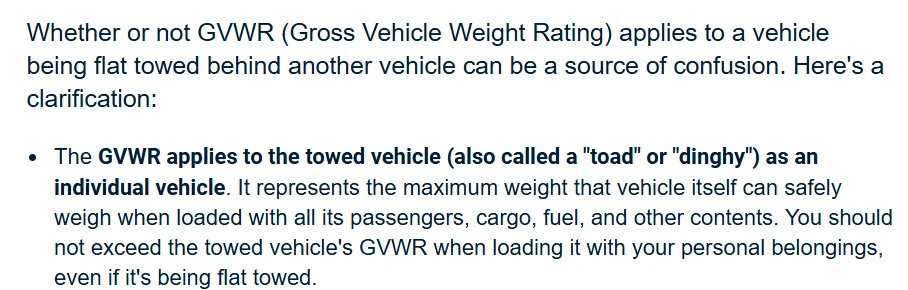
You can talk circles around the GVRW, in this configuration the JT is NOT considered a vehicle. It is a trailer. The JT has no rating anywhere for this type of service. If the tow vehicle is rated for the JT + cargo, then the tow vehicle is legally towing.
Get out of the box of thinking in motor vehicle terms, doesn't apply.


... Please site your references...HAHAHAHA - yeah, right.
Do some research yourself - the rules still apply. It's still a vehicle with a GVWR, truck or trailer, it's still the same.
I've been down this road before, many times. It still applies. It still has a GVWR no matter how it's operated on the public highway.
Ya can't stand me maybe being correct.