
ShadowsPapa
Well-Known Member
- First Name
- Bill
- Joined
- Oct 12, 2019
- Threads
- 247
- Messages
- 40,442
- Reaction score
- 53,859
- Location
- Runnells, Iowa
- Vehicle(s)
- '25 JTMX, '23 JLU 4xe, '82 SX4, '73 Javelin
- Occupation
- Retired auto mechanic, frmr gov't ntwrk security admin
- Vehicle Showcase
- 3
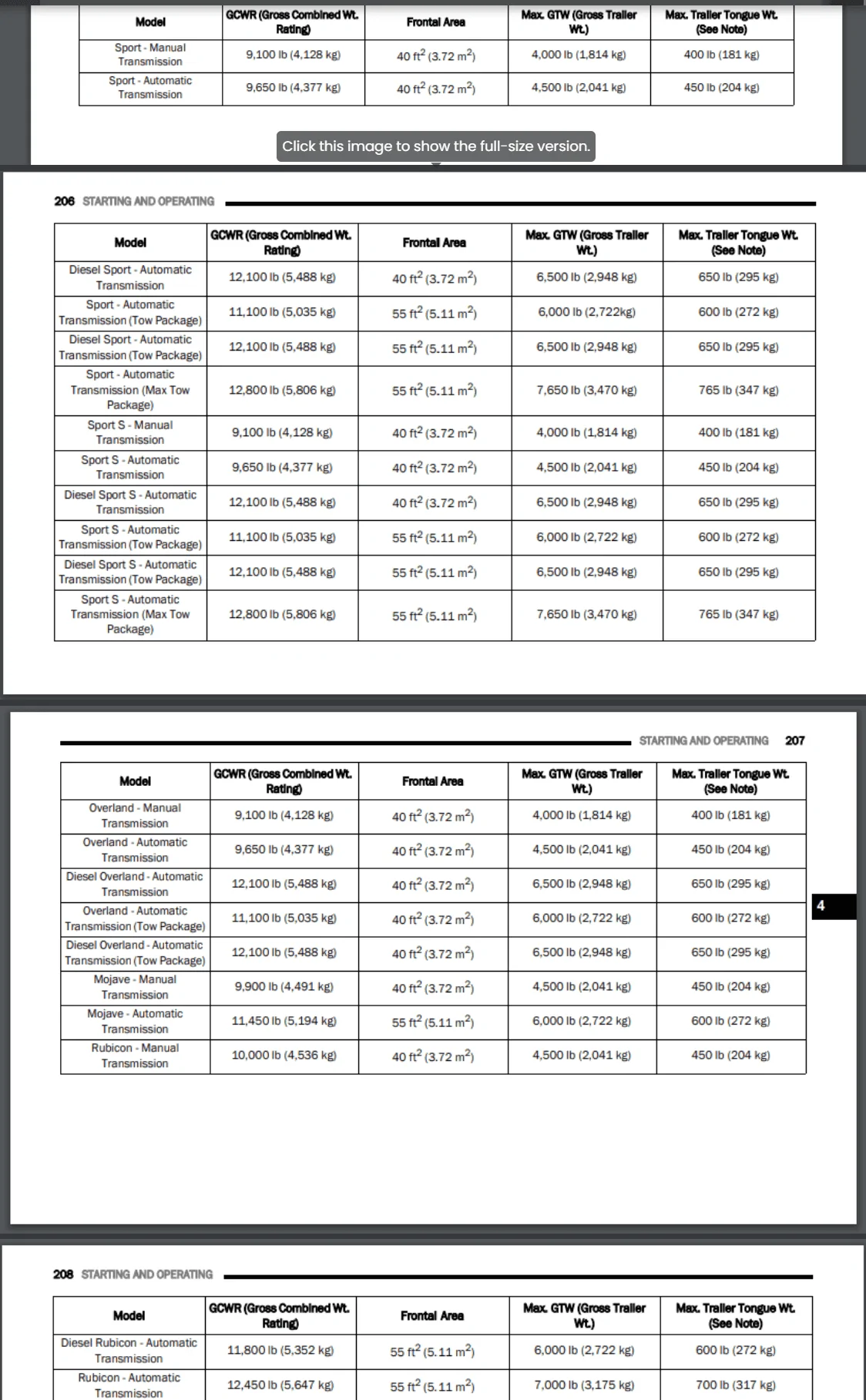
Stock tires are sufficient - don't get hung up on load ratings for these trucks because even the stock tires have ratings that exceed anything the truck can carry.This was a level lift - 2" - I was planning on wheels and tires - so if it stays at 4500, with just the engine cooling added... and my brother said something about a transmission cooling and making sure the tires are sufficient (he's going to send me more info I just don't know) ...how do I find out how much I would be able to tow?
I tow and for years have towed 5,000 and more with totally stock/factory tires, no fancy load ratings. I've towed heavy tractors with my trucks - always on factory tires.
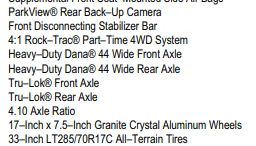
The tires that came with my Overland have a max rating of 2535.
Take just the rear end of the truck, that means 5070 total over the two rear tires
Assuming a rear axle weight, stock, of 2500 pounds, that's still 2500 pounds for trailer tongue weight and payload - and your truck won't have that much payload.
10,000 pounds over 4 tires, a heavy Gladiator loaded down with accessories won't take over 6,000 pounds, that's 4000 pounds for tongue weight and payload - that the truck can't carry.
The tires will handle more than any Gladiator will handle.
Where people want the extra tire toughness is off-roading and such, but if you are talking towing, any tire rated at least as much as the factory tires, or even more, will be fine.
My tires don't even get warm on a hot day of towing.
I stop at rest areas, check the tie down straps holding my car onto my car hauler, check the hitch and safety equipment and check the tire sidewalls and bearing areas. They never run hot.
A key can be keeping the tires aired up for the extra load.
It's the air inside the tire holding the weight of the vehicle up - psi working against the tire's footprint. So more weight means you need to add air.
I might run my tires at 36 psi for normal driving, but I'll air up to 38-40 psi towing.
Think of a balloon - you push it against the floor with xx amount of pressure to squish it a given amount. If you put more weight on it you squish it more - so you add enough aid to keep it squished the same amount as before when the extra weight is added.
I air up for towing, and air back down when done.
You do want to make sure that you don't go down in tire weight ratings - that is definitely a legal area. If you exceed the tire's weight ratings while towing or hauling payload, that's a federal thing and troopers can stop you for that if they have reason to suspect, or if you have an accident, etc. (that's first-hand information from the horse's mouth)
You'll never be able to figure how much a modified truck can tow - it's all in the engineering - height/center of gravity, width, tire size and weight, and a whole lot more.
Tow ratings come from not only engineering for a goal, but SAE testing as well. They engineer toward a goal, run it through the testing to see if it can get through the test. If not, they go back and figure out where it failed and make the needed changes. Once it passes the testing, that's where it gets the rating for that model of truck, equipped as it comes from the factory.
There's no chart or formula where you can say "I've made this list of changes, now what is my rating".
Just know that your tow rating is as equipped from the factory. Modifications to wheels, tires, added accessories adding weight, changes in the height (a lift, which changes center of gravity, steering and braking performance) all work to change the towing ability in negative ways.
Because the testing is acceleration, steering, and braking under specific conditions, any change in height will drop the ability of a truck to safely tow down.
Larger tires reduce braking ability- increase braking distance, for example.
A lift makes it less stable in emergency towing situations.
In other words - we go right back to - you need to get a truck that's made to tow what you need to tow even after you modify it and end up reducing the towing ability by unknown numbers.
Don't take a 4500 pound towing capacity truck and think you are going to modify it and add weight and now be able to tow more.
You could get into civil court and insurance situations if you try to tow too much with a modified truck and have an accident.
I just can't see a way where this turns out as you want in the end since you also plan on modifications to it - and have already reduced the factory number with a lift.
Even a max tow with a lift won't still have the same capabilities and safety margins it came with from the factory once you start lifting and adding tires and wheels.
In other words - it's got to be a choice - will it be a work/tow vehicle, or one for play and mods?
Sponsored
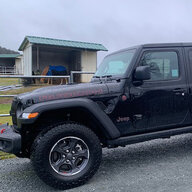
 I want it to work for me and play a little. I love the look of it with the lift. If I knew all this before buying, I wouldn't have had the lift put on because it doesn't make sense - with my limited budget - to have it if it can't work for me too. I don't really want another full size truck.