Dilly’S Willy
Well-Known Member
- First Name
- D
- Joined
- Nov 26, 2025
- Threads
- 13
- Messages
- 567
- Reaction score
- 563
- Location
- Fucking, Austria
- Vehicle(s)
- 21 PBJ Gladiator Willys 6spd, 02 wrx wagon (stroker), 25 ZP 450E
- Build Thread
- Link
- Occupation
- Engineer/Business Owner
We call this Power/Weight Ratio.I forget the rule of thumb, but it's something like for every 200# it costs 2-4% mpg.
Bigger, heavier, chunkier tires drop mpgs.
Taller, heavier vehicles drop mpgs.
Towing drops mpgs.
But we already knew this going in - just looking at a Gladiator or Wrangler know it's not the most aerodynamic thing on the market.
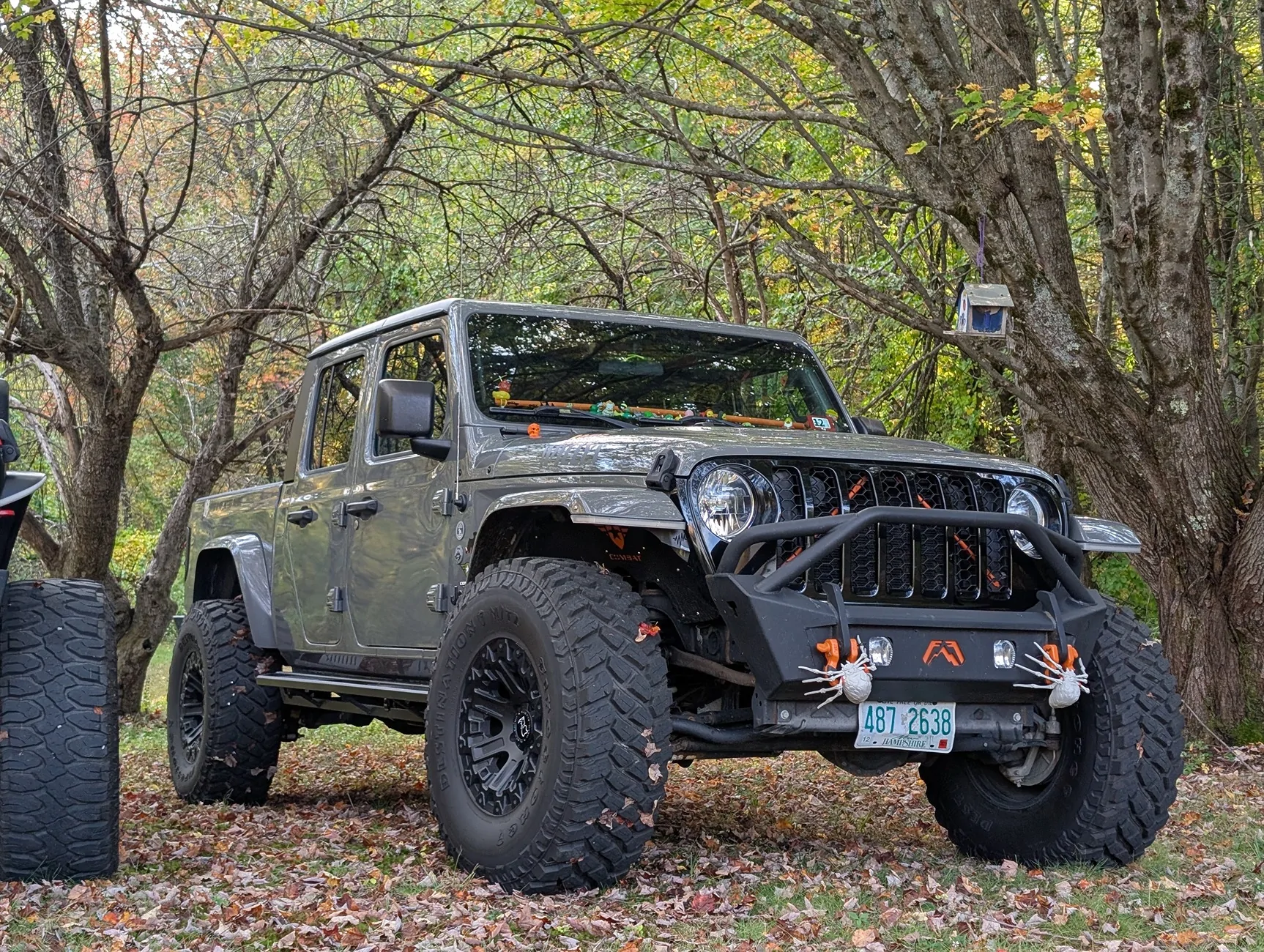
Added weight with same power means slower acceleration. That's just static weight. For rotating mass, it's even more harsh: Every 5lbs of rotating mass = 20lbs of static mass. So those bigger/meatier tires that now weigh 60lbs compared to the Sport with 35lbs tires, means you've essentially added 240lbs that your truck now must move too.
Rotating mass isn't limits to tires, but also wheels, axles, R&P, differentials/lockers, brake rotors, etc. Those HD chromoly axles, yup more weight.
The aero drag is another factor, but with a speed limited below 100mph, it's mostly irrelevant. But for funzies: if it takes 10sec for a vehicle with 100hp to go 0-60, it will take 200hp to make the same vehicle go from 60-120 in 10sec (not factoring drag coefficient) and 400hp to go from 120-180 in 10sec. Learned in motorcycle racing where we reach 180+ often.
Making more power also uses more fuel. But if you're buying a truck for mpg, go buy a car with a pickup bed. Their modern ABS-based AWD will do most of what you want, other than low range crawling. Man remember the Brat? Best of both worlds for its time.
Sponsored



 )
)