Sponsored

Tow Hooks...What are They For?

Eric Kern

Well-Known Member
First Name
Eric
Joined
Oct 1, 2019
Threads
18
Messages
236
Reaction score
142
Location
Colchester
Vehicle(s)
2020 Gladiator Launch Edition Bright White (stock) / 2009 Harley Davidson Night Train / 2021 Yamaha GP1800R Riva Racing Stage 1+
Every situation is unique but I’ve used the tow hooks to drag people out, get dragged out, never broke one, bent one, blah blah blah...but again, every situation is unique, their have certainly been times where I opted not to use the hooks.
Sponsored
 

SwampNut

Well-Known Member
First Name
Carlos
Joined
Apr 20, 2020
Threads
21
Messages
1,588
Reaction score
1,571
Location
Peoria AZ
Vehicle(s)
2020 Gladiator Launch Edition
Occupation
Geek
There's a factory steel bumper option that comes with shackles??
 

Blade1668

Well-Known Member
First Name
Darrell
Joined
Jan 7, 2020
Threads
12
Messages
3,263
Reaction score
3,149
Location
N. AL.
Vehicle(s)
90XJ, 91XJ, 91MJ, 05 LJ, 20 JT
Build Thread
Link
Vehicle Showcase
1
Get that sucker down in the Iowa clay and you'll need an act of God to get the Pull-Pal back out of the muck. A power auger can't even bore through the stuff in my yard. (we tried, wasn't possible)
Ahhh the good old Mid-West clay, I have met quite a bit of it in my youth. To include getting my car stuck due to not being able to see the road from fog when I was leaving from fishing. I ended up being pulled out with a dozer. I had clay up on door's down in river bottoms. I was lucky that I was known as the kid always out fishing or hunting then not the parties of drinking or smoking. I started going out fishing walking or bike to river then with my car after I got a D/L.
 

ACAD_Cowboy

Well-Known Member
First Name
Francis
Joined
May 1, 2019
Threads
22
Messages
1,414
Reaction score
1,960
Location
NY
Vehicle(s)
15 jkur
So what ARB is actually saying is there is a difference between a towing point and a recovery point aka a hard point.

Down'yonder in ARB country many people wheel japanese IFS/IRS machines and you will see on them a front and rear eye made from light metal welded to the tub. You use these to pull them onto a roll back and the like. These are also used to lash them for transport. This would also include any screw in tow eyes as well.

These are not to be used as a recovery point.

Down'yonder they also do a good trade in vehicle specific fabricated & engineered recovery points for recovery. ARB is telling you flat out to pull from a rated point. These are rated points.

As for the JK,JL and JT, the front and rear hooks are rated recovery points. As I recall the JK fronts hooks are rated at 10k when used as a pair. I assume the rears are likewise. Somewhere jeep has some back patting documentation on the JL and JT points, I have to assume they are at least 10k for the JT based on weight of the truck alone.

Now for fun, take a 3/4 bow shackle and see how very nicely it fits the front hooks, kinda like they intended it to go there. Freaky right? I personally wouldnt' want to use a bumper mounted shackle eye as compared to a frame mounted eye because unless the company can show you verifiable documentation that the eye and bumper structure is rated for the forces and force paths, you start yanking on it and it's liable to deform at the least and become a missile toward the far end of the envelope. I'm not saying the bumpers aren't strong, more that they are mostly designed to work in compression not tension. I've seen very strong things fail badly when used the wrong way.

So to recap: tow points bad, recovery points good, rated points beat bubba said everyday.
 

Sponsored

ShadowsPapa

Well-Known Member
First Name
Bill
Joined
Oct 12, 2019
Threads
247
Messages
40,449
Reaction score
53,885
Location
Runnells, Iowa
Vehicle(s)
'25 JTMX, '23 JLU 4xe, '82 SX4, '73 Javelin
Occupation
Retired auto mechanic, frmr gov't ntwrk security admin
Vehicle Showcase
3
So what ARB is actually saying is there is a difference between a towing point and a recovery point aka a hard point.

Down'yonder in ARB country many people wheel japanese IFS/IRS machines and you will see on them a front and rear eye made from light metal welded to the tub. You use these to pull them onto a roll back and the like. These are also used to lash them for transport. This would also include any screw in tow eyes as well.

These are not to be used as a recovery point.

Down'yonder they also do a good trade in vehicle specific fabricated & engineered recovery points for recovery. ARB is telling you flat out to pull from a rated point. These are rated points.

As for the JK,JL and JT, the front and rear hooks are rated recovery points. As I recall the JK fronts hooks are rated at 10k when used as a pair. I assume the rears are likewise. Somewhere jeep has some back patting documentation on the JL and JT points, I have to assume they are at least 10k for the JT based on weight of the truck alone.

Now for fun, take a 3/4 bow shackle and see how very nicely it fits the front hooks, kinda like they intended it to go there. Freaky right? I personally wouldnt' want to use a bumper mounted shackle eye as compared to a frame mounted eye because unless the company can show you verifiable documentation that the eye and bumper structure is rated for the forces and force paths, you start yanking on it and it's liable to deform at the least and become a missile toward the far end of the envelope. I'm not saying the bumpers aren't strong, more that they are mostly designed to work in compression not tension. I've seen very strong things fail badly when used the wrong way.

So to recap: tow points bad, recovery points good, rated points beat bubba said everyday.
The hooks line up with the frame horns, correct? So pulling directly on the frame?
Just asking... u seemed to know a few things.......
 

ACAD_Cowboy

Well-Known Member
First Name
Francis
Joined
May 1, 2019
Threads
22
Messages
1,414
Reaction score
1,960
Location
NY
Vehicle(s)
15 jkur
Yes, they do. Bolt right to the frame.

And don't be the chuckle head I saw the other day who removed his plastic shell, cut down the steel inner member and then mounted his hooks upside down... so the rope or strap just falls off once the tension is backed down? Great.
 

WK2JT

Well-Known Member
First Name
Darren
Joined
Mar 11, 2020
Threads
18
Messages
806
Reaction score
832
Location
Highlands Ranch, CO
Vehicle(s)
JTC
Vehicle Showcase
1
The hooks line up with the frame horns, correct? So pulling directly on the frame?
Just asking... u seemed to know a few things.......
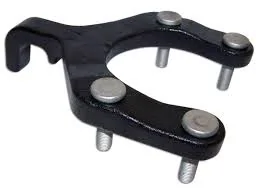
I just installed the steel Rubicon bumper on my Overland. The factory tow hooks/recovery points are directly attached to the frame horns with 4 studs. The tow hooks have the studs pressed through them like a hub and they sandwich the bumper to the frame.
Jeep Gladiator Tow Hooks...What are They For? 411E8490-89BC-4AC0-918E-A07DF0165979
 

ShadowsPapa

Well-Known Member
First Name
Bill
Joined
Oct 12, 2019
Threads
247
Messages
40,449
Reaction score
53,885
Location
Runnells, Iowa
Vehicle(s)
'25 JTMX, '23 JLU 4xe, '82 SX4, '73 Javelin
Occupation
Retired auto mechanic, frmr gov't ntwrk security admin
Vehicle Showcase
3
I just installed the steel Rubicon bumper on my Overland. The factory tow hooks/recovery points are directly attached to the frame horns with 4 studs. The tow hooks are what actually have the studs pressed through them like a hub and they sandwich the bumper to the frame.
411E8490-89BC-4AC0-918E-A07DF0165979.jpeg
Sort of figured but being unSURE, thought I'd ask
- good detailed explanation.

It shows they were serious about those hooks.
 

Gvsukids

Well-Known Member
First Name
Justin
Joined
Mar 7, 2020
Threads
26
Messages
7,294
Reaction score
6,926
Location
Grand Rapids
Website
www.youtube.com
Vehicle(s)
2020 Gladiator Sport S Max Tow
Occupation
Delivery Driver
Every situation is unique but I’ve used the tow hooks to drag people out, get dragged out, never broke one, bent one, blah blah blah...but again, every situation is unique, their have certainly been times where I opted not to use the hooks.
So to recap: tow points bad, recovery points good, rated points beat bubba said everyday
Should the tow hooks be used in tandem as a recovery point? Or should I look at installing frame mounted recovery points underneath the bumper? Should I even retain my steel bumper skid plate?
 

Sponsored

hjdca

Well-Known Member
Joined
Oct 27, 2019
Threads
9
Messages
1,733
Reaction score
2,494
Location
Southern California Mountains
Vehicle(s)
Jeep Gladiator Rubicon manual Sting Gray
Build Thread
Link
I have a Rubicon (steel bumper); what if I don't want to swap it out?
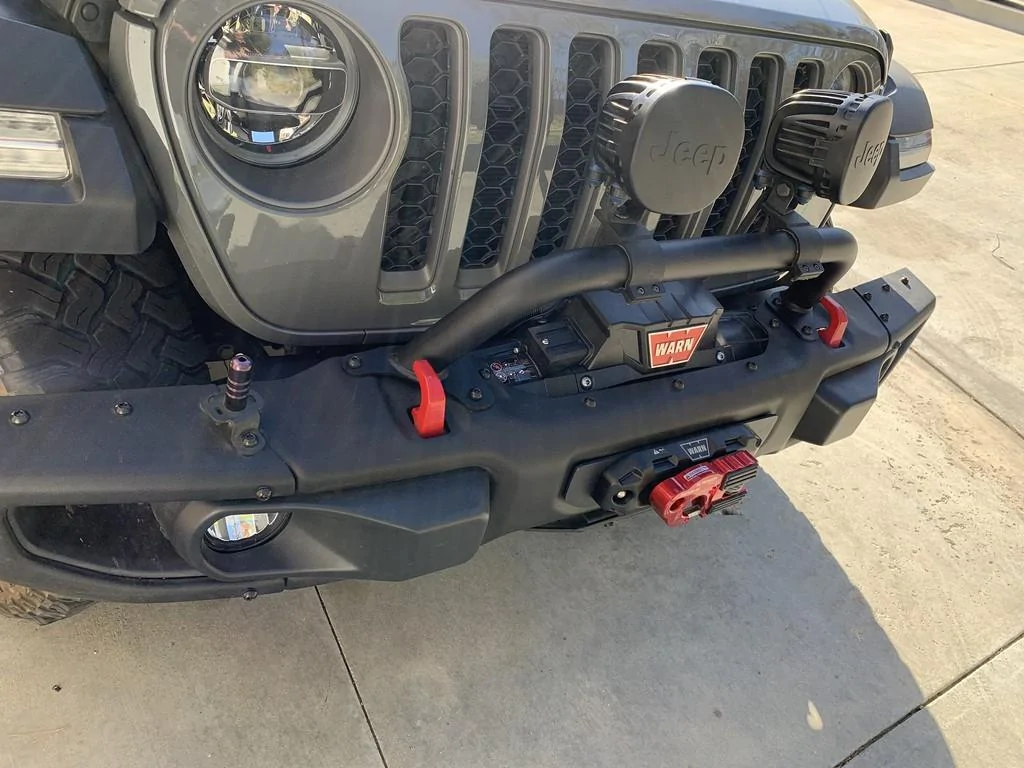
I just posted this in another thread... The Warn Bull bar for the Jeep steel bumper will close up the open hooks, so, they are safer for winching/pulling. Here is a pic.

Jeep Gladiator Tow Hooks...What are They For? hviNja
 

ACAD_Cowboy

Well-Known Member
First Name
Francis
Joined
May 1, 2019
Threads
22
Messages
1,414
Reaction score
1,960
Location
NY
Vehicle(s)
15 jkur
And since I'm still up at this ungodly hour (working 5 to 5 on the over with 2 hours of driving there and back, 600 feet of tower climbing with 8 hours of grinding and 2 hours of cleaning with some over the hub on the devils jungle gym, sun = scary)

To recap a recap, most vehicle's tow points are for the vehicle to be pulled out of a ditch or onto a flatbed etc. While this is called towing and recovery, it is not Recovery!¡!. These small welded eye loops and screw in eyes are strong yes but not winching across the Darien strong.

Jeep hooks, front or rear are rated for 10k of pull per which is nominally 2x GVWR which is typically plenty strong BUT this is in the Z axis only ( longitudinal axis or length of truck) and really only in the 0° horizontal plane. You get maximal strength pulling flat and in-line. Please consult the chicken entrails, billavista or winch and gesr manufacturers to infer/deduce/WAG how much the strength declines as you move away from 0°/0°.

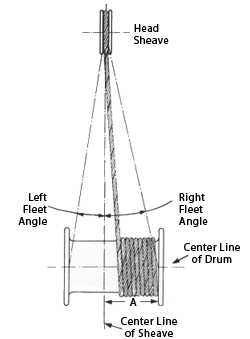
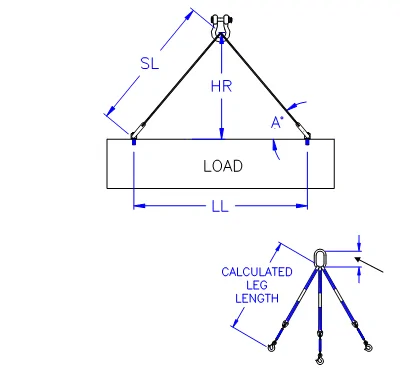
If you use them in tandem doing a bridle pull ( length of rope/cable across the hooks with a eye ring) you can decrease the stress loading on the jeep provided the bridle is long enough. Somewhere in the bowels of the collection is a book on ship board crane and winching operations and in it they discussed fleet angle and sling pitch & length.

Some photos
Jeep Gladiator Tow Hooks...What are They For? fleet12


Jeep Gladiator Tow Hooks...What are They For? calculator_2leg


Short story long is fleet should be between 2° and 4° for optimum loading of the drum and minimization of stresses in the winch mount. In our case this is a function of the distance between the fairlead and the drum. The next tidbit is what concerns us and that is the pitch angle of the bridle. If your leg length is too short, ie a small angle between load and line, the bridle will
transfer compressive lateral forced between the hooks. So longer legs with greater angles reduces lateral loading.

If you were really feeling it you could add your own additional recovery hard points to the frame, obviously how they are designed and constructed would play a roll in how well they perform. Placement and packaging would be the big hurdles, too massive and they become their own entanglement hazard when crawling.
 

ShadowsPapa

Well-Known Member
First Name
Bill
Joined
Oct 12, 2019
Threads
247
Messages
40,449
Reaction score
53,885
Location
Runnells, Iowa
Vehicle(s)
'25 JTMX, '23 JLU 4xe, '82 SX4, '73 Javelin
Occupation
Retired auto mechanic, frmr gov't ntwrk security admin
Vehicle Showcase
3
And since I'm still up at this ungodly hour (working 5 to 5 on the over with 2 hours of driving there and back, 600 feet of tower climbing with 8 hours of grinding and 2 hours of cleaning with some over the hub on the devils jungle gym, sun = scary)

To recap a recap, most vehicle's tow points are for the vehicle to be pulled out of a ditch or onto a flatbed etc. While this is called towing and recovery, it is not Recovery!¡!. These small welded eye loops and screw in eyes are strong yes but not winching across the Darien strong.

Jeep hooks, front or rear are rated for 10k of pull per which is nominally 2x GVWR which is typically plenty strong BUT this is in the Z axis only ( longitudinal axis or length of truck) and really only in the 0° horizontal plane. You get maximal strength pulling flat and in-line. Please consult the chicken entrails, billavista or winch and gesr manufacturers to infer/deduce/WAG how much the strength declines as you move away from 0°/0°.

If you use them in tandem doing a bridle pull ( length of rope/cable across the hooks with a eye ring) you can decrease the stress loading on the jeep provided the bridle is long enough. Somewhere in the bowels of the collection is a book on ship board crane and winching operations and in it they discussed fleet angle and sling pitch & length.

Some photos
fleet12.gif


calculator_2leg.jpg


Short story long is fleet should be between 2° and 4° for optimum loading of the drum and minimization of stresses in the winch mount. In our case this is a function of the distance between the fairlead and the drum. The next tidbit is what concerns us and that is the pitch angle of the bridle. If your leg length is too short, ie a small angle between load and line, the bridle will
transfer compressive lateral forced between the hooks. So longer legs with greater angles reduces lateral loading.

If you were really feeling it you could add your own additional recovery hard points to the frame, obviously how they are designed and constructed would play a roll in how well they perform. Placement and packaging would be the big hurdles, too massive and they become their own entanglement hazard when crawling.
I liken it to when I picked up a car by the roof with my gantry crane. Granted, I was taking it to get crushed and collect a few bucks for the scrap price, but I started the crush process before it got to my trailer - Yes, you know what happened. There was no engine, no transmission, it was sans-drive train but still, the forces of the straps on each side of the roof and their short length meant the roof was half as wide as original by the time I got it off the ground. (I actually found that fun)
The lateral forces compressed sideways before pulling upward. Had I used a really long strap, it wouldn't have happened but then my gantry crane isn't 30' tall, either and I had to lift the thing high enough to get my trailer under it.
So in short - short straps or cables on those tow hooks will tend to pull them to the center of the pull - laterally, where they have less strength.
I always considered "tow hooks" to be for towing and if I was REALLY stuck, I'd hook onto something more substantial.

I'll never forget the episode of Ice Road Truckers where Alex came upon a car off the road deep i the snow. He handed the driver a chain and said "here, hook this onto something you don't care about" and laughed as he walked back to his truck to pull the guy out.
 

Gvsukids

Well-Known Member
First Name
Justin
Joined
Mar 7, 2020
Threads
26
Messages
7,294
Reaction score
6,926
Location
Grand Rapids
Website
www.youtube.com
Vehicle(s)
2020 Gladiator Sport S Max Tow
Occupation
Delivery Driver
So in short - short straps or cables on those tow hooks will tend to pull them to the center of the pull - laterally, where they have less strength.
So a long strap will lessen the force of the pull on the hooks?
 

ACAD_Cowboy

Well-Known Member
First Name
Francis
Joined
May 1, 2019
Threads
22
Messages
1,414
Reaction score
1,960
Location
NY
Vehicle(s)
15 jkur
The longer you make that A shape, the less lateral force you will generate. Now, how much force is needed to bend up your frame members is a topic for the engineers but sufficed to say the less effort you waste there means more e energy for winching you out.

If you can, however, try to use both hooks whenever you can, safer overall.
Sponsored


Top