DankjeeP
Well-Known Member
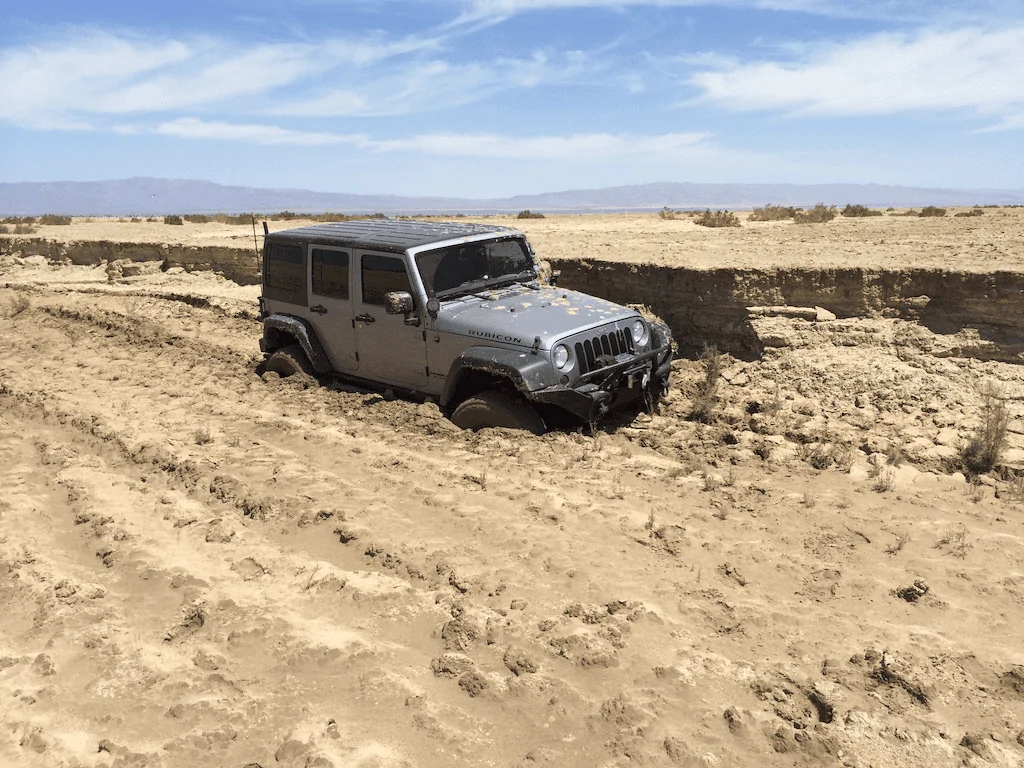
Mud = no FUN. F mud lolThis was dragging an F350 on 38s back into the mud...

Sponsored

Mud = no FUN. F mud lolThis was dragging an F350 on 38s back into the mud...
I like it!And since I'm still up at this ungodly hour (working 5 to 5 on the over with 2 hours of driving there and back, 600 feet of tower climbing with 8 hours of grinding and 2 hours of cleaning with some over the hub on the devils jungle gym, sun = scary)
To recap a recap, most vehicle's tow points are for the vehicle to be pulled out of a ditch or onto a flatbed etc. While this is called towing and recovery, it is not Recovery!¡!. These small welded eye loops and screw in eyes are strong yes but not winching across the Darien strong.
Jeep hooks, front or rear are rated for 10k of pull per which is nominally 2x GVWR which is typically plenty strong BUT this is in the Z axis only ( longitudinal axis or length of truck) and really only in the 0° horizontal plane. You get maximal strength pulling flat and in-line. Please consult the chicken entrails, billavista or winch and gesr manufacturers to infer/deduce/WAG how much the strength declines as you move away from 0°/0°.
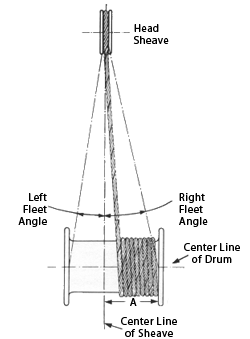
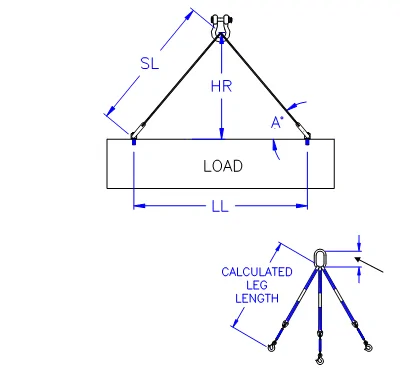
If you use them in tandem doing a bridle pull ( length of rope/cable across the hooks with a eye ring) you can decrease the stress loading on the jeep provided the bridle is long enough. Somewhere in the bowels of the collection is a book on ship board crane and winching operations and in it they discussed fleet angle and sling pitch & length.
Some photos


Short story long is fleet should be between 2° and 4° for optimum loading of the drum and minimization of stresses in the winch mount. In our case this is a function of the distance between the fairlead and the drum. The next tidbit is what concerns us and that is the pitch angle of the bridle. If your leg length is too short, ie a small angle between load and line, the bridle will
transfer compressive lateral forced between the hooks. So longer legs with greater angles reduces lateral loading.
If you were really feeling it you could add your own additional recovery hard points to the frame, obviously how they are designed and constructed would play a roll in how well they perform. Placement and packaging would be the big hurdles, too massive and they become their own entanglement hazard when crawling.

This fella does a good job breaking it down:And since I'm still up at this ungodly hour (working 5 to 5 on the over with 2 hours of driving there and back, 600 feet of tower climbing with 8 hours of grinding and 2 hours of cleaning with some over the hub on the devils jungle gym, sun = scary)
To recap a recap, most vehicle's tow points are for the vehicle to be pulled out of a ditch or onto a flatbed etc. While this is called towing and recovery, it is not Recovery!¡!. These small welded eye loops and screw in eyes are strong yes but not winching across the Darien strong.
Jeep hooks, front or rear are rated for 10k of pull per which is nominally 2x GVWR which is typically plenty strong BUT this is in the Z axis only ( longitudinal axis or length of truck) and really only in the 0° horizontal plane. You get maximal strength pulling flat and in-line. Please consult the chicken entrails, billavista or winch and gesr manufacturers to infer/deduce/WAG how much the strength declines as you move away from 0°/0°.
If you use them in tandem doing a bridle pull ( length of rope/cable across the hooks with a eye ring) you can decrease the stress loading on the jeep provided the bridle is long enough. Somewhere in the bowels of the collection is a book on ship board crane and winching operations and in it they discussed fleet angle and sling pitch & length.
Some photos
Short story long is fleet should be between 2° and 4° for optimum loading of the drum and minimization of stresses in the winch mount. In our case this is a function of the distance between the fairlead and the drum. The next tidbit is what concerns us and that is the pitch angle of the bridle. If your leg length is too short, ie a small angle between load and line, the bridle will
transfer compressive lateral forced between the hooks. So longer legs with greater angles reduces lateral loading.
If you were really feeling it you could add your own additional recovery hard points to the frame, obviously how they are designed and constructed would play a roll in how well they perform. Placement and packaging would be the big hurdles, too massive and they become their own entanglement hazard when crawling.

And proves it as well. Love his simplified whiteboard examples.This fella does a good job breaking it down:
This is as close as I can find:And proves it as well. Love his simplified whiteboard examples.
Interesting note unless I'm using the incorrect key words, I can't find bridle on Amazon. I see kinetic recovery ropes (not the right thing for sure) and I see straps of all sorts.
Yeah, that's the closest I could find as well, but at 15' total length, that's only going to get 7' away from the vehicle leading to some heavy inward pull.
Essentially a tree saver strap. Maybe using a 20 ft tow strap between the two hooks would be as useful.
I have 2 30' straps.Essentially a tree saver strap. Maybe using a 20 ft tow strap between the two hooks would be as useful.
Search under "nylon slings."And proves it as well. Love his simplified whiteboard examples.
Interesting note unless I'm using the incorrect key words, I can't find bridle on Amazon. I see kinetic recovery ropes (not the right thing for sure) and I see straps of all sorts.
On a similar note, I'm looking into the feasibility of reversing my rear tow hooks to better accommodate a bridle or generally optimizing recovery options.I have 2 30' straps.
I could use one of those with a sleeve of some sort on it so it could slide. I didn't measure between the hooks on these but used his numbers from the video and figured I'd need 4.7-5.3 meters - 5 meters works out to 16 feet, roughly. So 16' doubled is 32' so I thought maybe a 30' rope or strap could serve, allowing enough distance from vehicle being pulled out to the point the rope was connected or hooked to the strap/rope. I was looking for a rope because you do want to be able to slide on the rope.
I want to get a second tow hook for the rear. Reversing them sounds like a good idea, especially with a bridle.On a similar note, I'm looking into the feasibility of reversing my rear tow hooks to better accommodate a bridle or generally optimizing recovery options.
Will do.Search under "nylon slings."
HF has a 3"x30' with a working load of 18k lbs IIRC.
I also try to reduce what I carry. I carry lots of soft shackles - you can do a lot with soft shackles --- and if you buy an abrasion resistant sleeve, you can use your tree saver strap as "Gvsukids" said above as a bridle. Something cheap like this ($10) should be enough to allow sliding. It takes up to a 3" wide strap.Essentially a tree saver strap. Maybe using a 20 ft tow strap between the two hooks would be as useful.