ACTman
Rock Sponsor (Level 1)
- First Name
- Dirk
- Joined
- Apr 23, 2019
- Threads
- 1
- Messages
- 111
- Reaction score
- 259
- Location
- Lancaster, CA
- Website
- www.advancedclutch.com
- Vehicle(s)
- 2015 Jeep JKUR, 2003 Jeep Wrangler
- Occupation
- President and head cheerleader at ACT
Don't bother. The dual-mass has nothing to do with the drivability. I haven't measured it, but less just say there is 20 degrees of rotation of damping in the flywheel, or 5% of one revolution. As you engage the clutch at 1500 rpm (for example), which is 25 rev/second, to bottom out 20 degrees of damping in the flywheel takes .05 seconds. Bottom-line: it happens too quick to be an influence on the drivability.I agree that nearly all of these are user induced however, based on my experience the easy stall low torque dual-mess setup combined with the long mushy break-in period exacerbates clutch abuse. I still firmly standby my theory that the dual-mass makes stalling far more likely and stall avoidance is why people slip it excessively.
I wonder how difficult it would be to weld up the dual mass and test this theory.
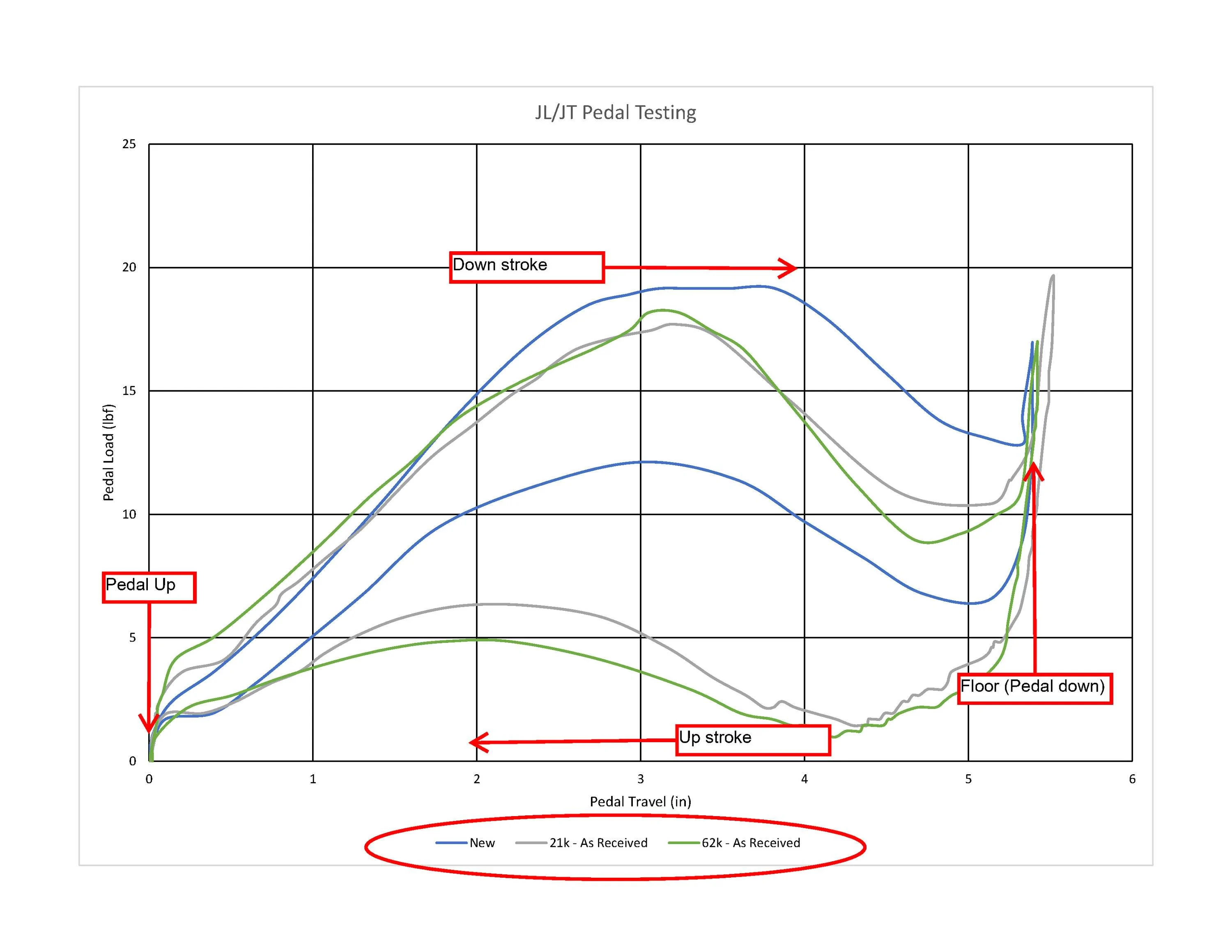
The reduced inertia does affect it though, since it has about 20% less inertia compared to the predecessor, the JK. Add inertia to the JL/JT and a predicable pedal feel and it vastly improves the drivability and make for a better driver experience.
Sponsored