Sponsored

Diesel cooling options and ideas

CrazyCooter

Well-Known Member
First Name
Tony
Joined
Nov 1, 2020
Threads
11
Messages
2,310
Reaction score
2,564
Location
Far NorCal
Website
www.overlandvehicledynamics.com
Vehicle(s)
1991 JEEP YJ, 2021 JTR Ecodiesel
Occupation
Specialty Off Road Shop Owner
I dont recall hearing about that issue. Their site points to some fins and structural adjustments to address this issue. I haven't had any issues on my jeep though to justify testing this product.
I was researching "better" radiators for my YJ years back and almost every manufacturer has complaints of multiple DOA or failures within warranty periods. Also my friends own a diesel shop locally and I remember how many they had to warranty and then they were backordered.....Bad deal.

I surely hope this could be a viable solution!
Sponsored

 
Last edited:

Rusty PW

Well-Known Member
First Name
Russ
Joined
Jan 10, 2022
Threads
37
Messages
11,366
Reaction score
30,329
Location
Fayette Nam, Pennsyltucky
Website
www.youtube.com
Vehicle(s)
'22 JTRD, '11 370Z Nismo, '07 Honda VFR
Build Thread
Link
Occupation
Muff Diver

Tom C

Well-Known Member
First Name
Tom
Joined
Apr 6, 2023
Threads
15
Messages
264
Reaction score
346
Location
Texas
Vehicle(s)
2023 Jeep Gladiator High Altitude Diesel
I haven't read the complete thread, so this is my 2 cents worth.

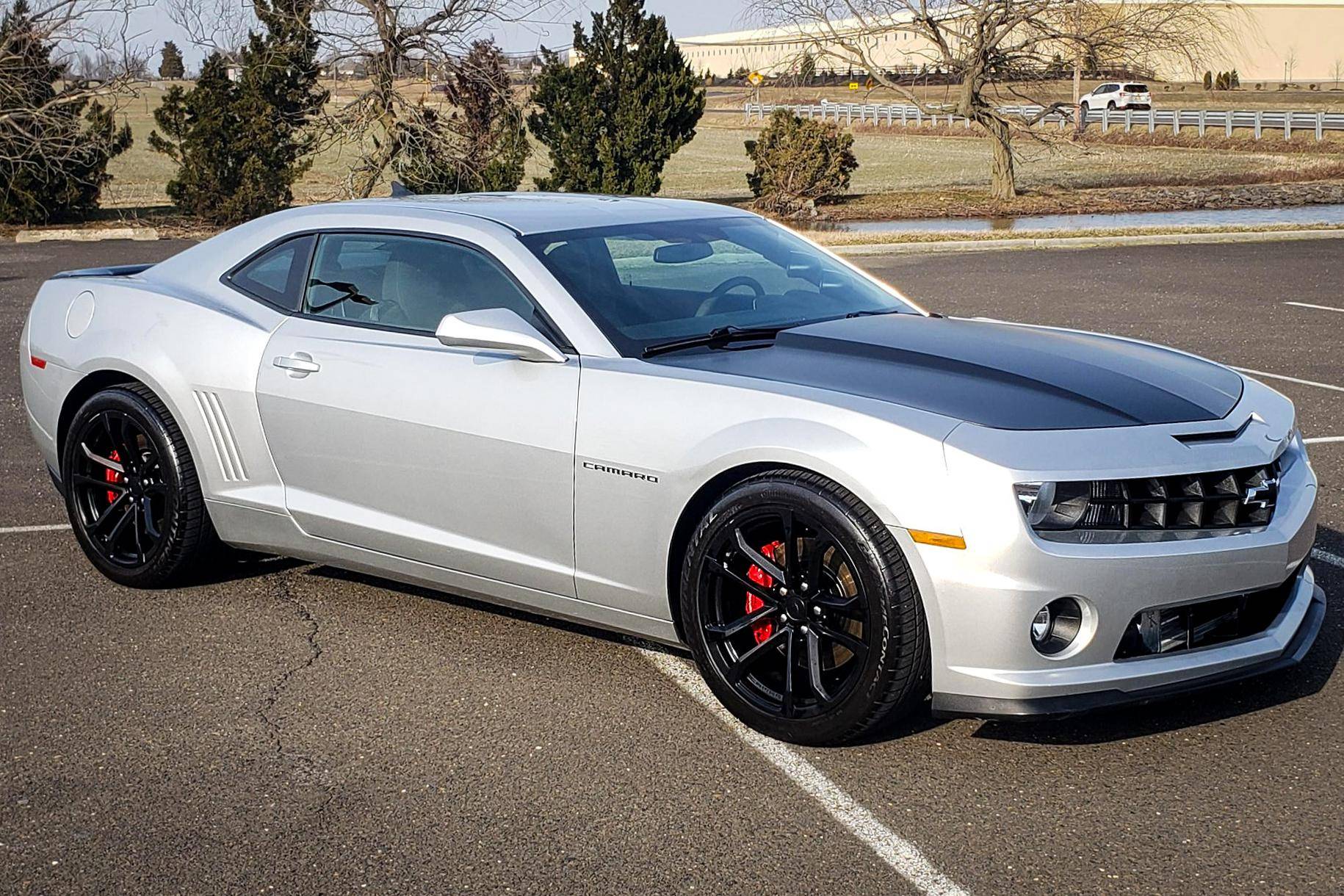
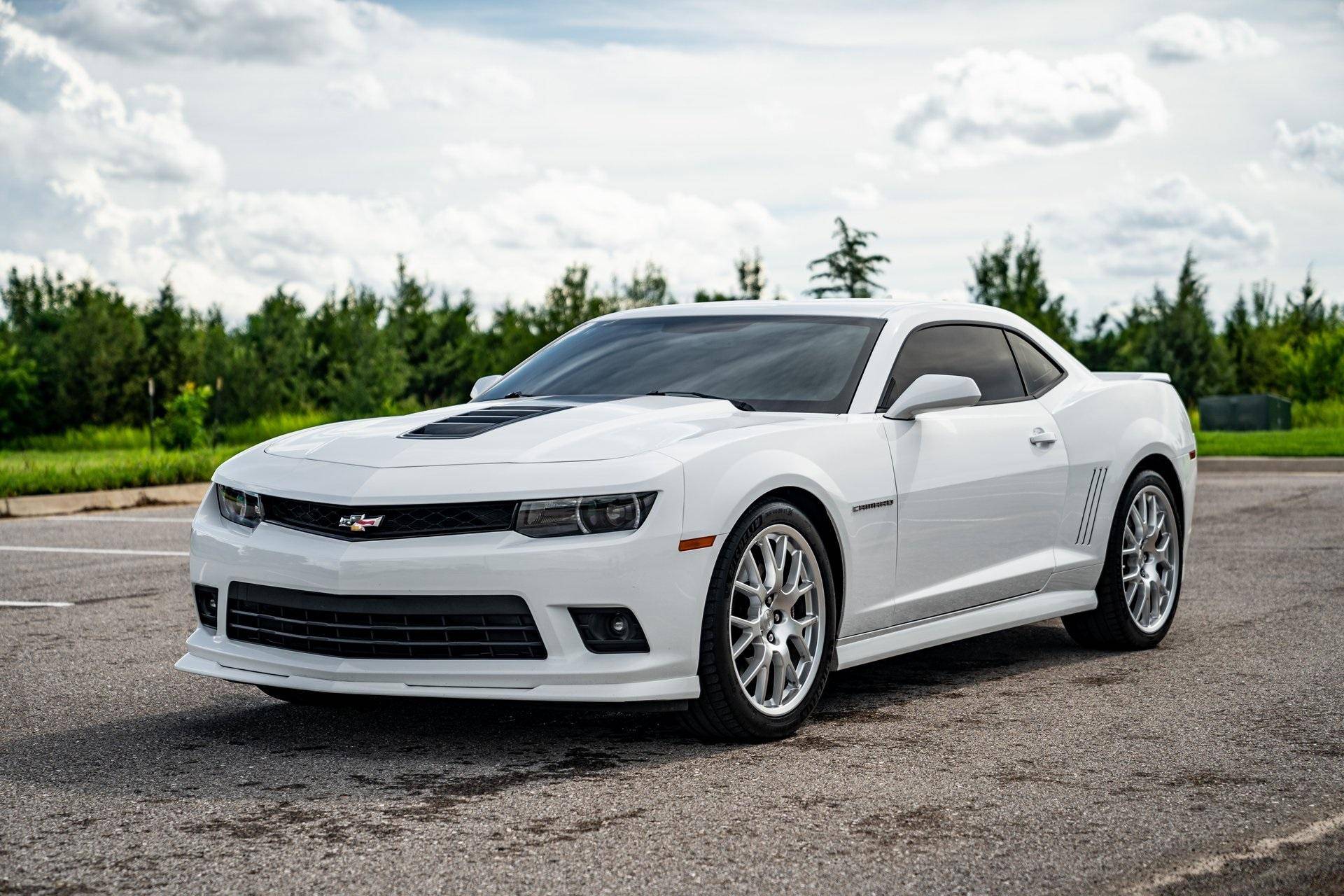
Chevrolet had some heat issues creaping into their 2010 through 2013 Chevrolet Camaros. Of course, this was an issue with hard track driving, not pulling a trailer. The major part of the solution was to add hood ventiation. The first photo is the 2013 Camaro SS, the Second the 2014 Camaro SS.

I actually own a 2014, and took it to the track 3 times, one day track driver training in which you supplied your own vehicle, and a couple of track days. Early June in North Texas, so temperatures never really got over 90 degrees F. I didn't experience any extreme temperatures, but on one outing, my friend that had a 2011 Camaro SS, his car was experiencing high temps and probably stayed parked half of the track day.

Anyway, as you can see, the 2013 has no hood ventilation while the 2014 does. Even during the summer parked at a traffic light, I can see the heat waves rising out of the hood.

I'm wondering if some sort of ventilation like the 2014 Camaro SS hood would work?

Jeep Gladiator Diesel cooling options and ideas 2013Camaro


Jeep Gladiator Diesel cooling options and ideas 2014Camaro
 
Last edited:

@californiajeeping

Well-Known Member
Joined
Apr 1, 2020
Threads
16
Messages
953
Reaction score
1,006
Location
California
Vehicle(s)
2022 Jeep Gladiator diesel, 1977 cj5 LS swapped
On some forums. You say that you bought a Mishimoto part. You better have a flame suit on. They don't have the best track record. On the Z forum. A lot of guys had shitty luck with their radiators. 18 months to 2yrs is the life span. Mishimoto is called mishashittymoto.
Wow had no idea they show a listing for the 3.0l ecodiesel. I may throw this in and run some evans waterless coolant.
 

Rusty PW

Well-Known Member
First Name
Russ
Joined
Jan 10, 2022
Threads
37
Messages
11,366
Reaction score
30,329
Location
Fayette Nam, Pennsyltucky
Website
www.youtube.com
Vehicle(s)
'22 JTRD, '11 370Z Nismo, '07 Honda VFR
Build Thread
Link
Occupation
Muff Diver
Wow had no idea they show a listing for the 3.0l ecodiesel. I may throw this in and run some evans waterless coolant.
Try Engine Ice for a coolant. I use it in my bikes and my Nismo.
 

Sponsored

@californiajeeping

Well-Known Member
Joined
Apr 1, 2020
Threads
16
Messages
953
Reaction score
1,006
Location
California
Vehicle(s)
2022 Jeep Gladiator diesel, 1977 cj5 LS swapped
I haven't read the complete thread, so this is my 2 cents worth.

Chevrolet had some heat issues creaping into their 2010 through 2013 Chevrolet Camaros. Of course, this was an issue with hard track driving, not pulling a trailer. The major part of the solution was to add hood ventiation. The first photo is the 2013 Camaro SS, the Second the 2014 Camaro SS.

I actually own a 2014, and took it to the track 3 times, one day track driver training in which you supplied your own vehicle, and a couple of track days. Early June in North Texas, so temperatures never really got over 90 degrees F. I didn't experience any extreme temperatures, but on one outing, my friend that had a 2011 Camaro SS, his car was experiencing high temps and probably stayed parked half of the track day.

Anyway, as you can see, the 2013 has no hood ventilation while the 2014 does. Even during the summer parked at a traffic light, I can see the heat waves rising out of the hood.

I'm wondering if some sort of ventilation like the 2014 Camaro SS hood would work?

2013Camaro.jpg


2014Camaro.jpg

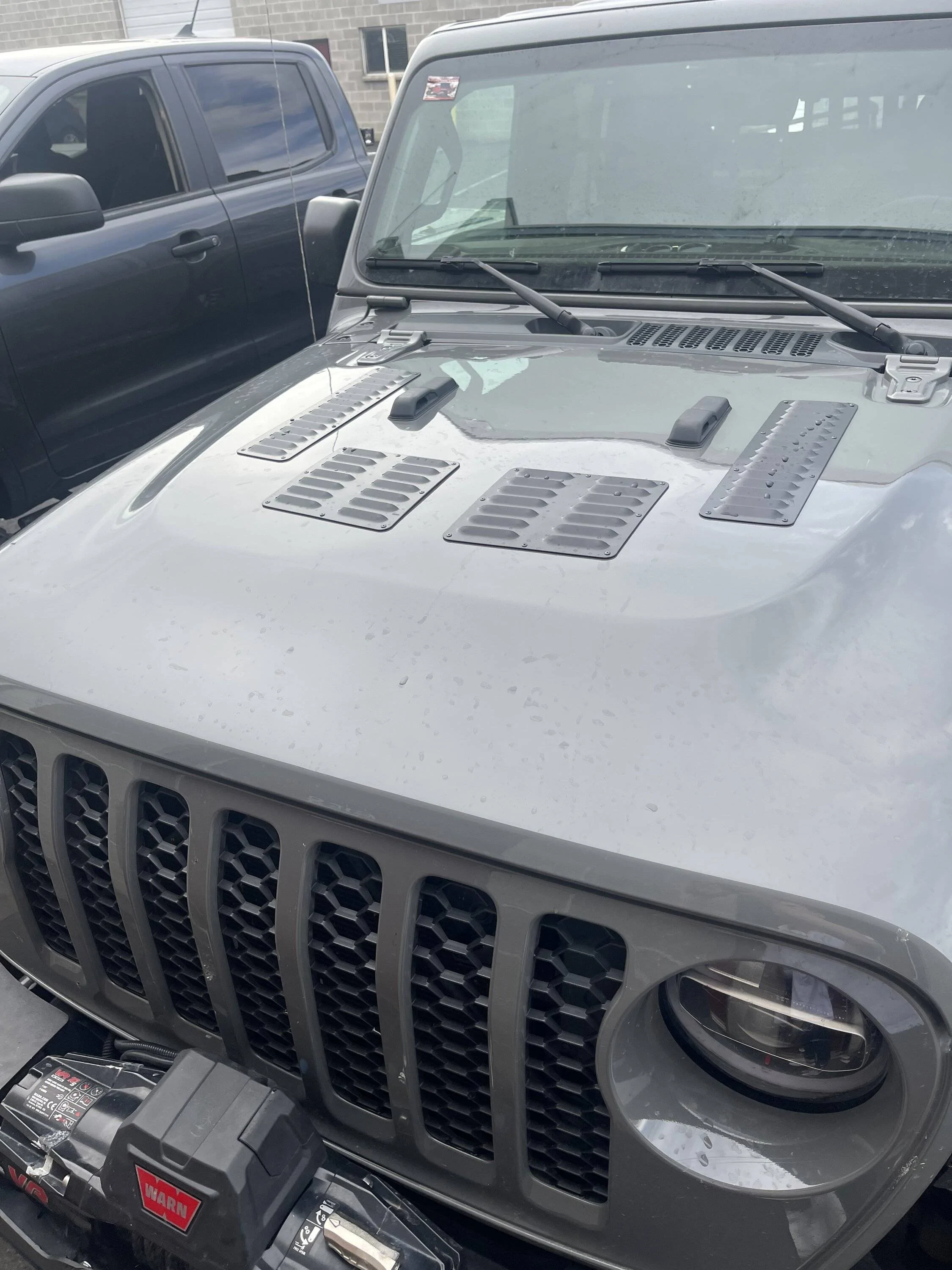
I have the poison spyder hood vent which gives you a 18" wide 12" deep square hole x2. It wont stop oil temp overheat. It does make it cool down drastically better once you crest a tall pass.

I still saw 250 regularly uphill at 70-75mph. Never got higher. With a freedom ECU and a freedom pipe ive seen some jeeps run 230-235 oil temp uphill without going higher where a stock one would be 250 plus.
 

Chief_jeep

Well-Known Member
First Name
Justin
Joined
Nov 7, 2022
Threads
17
Messages
389
Reaction score
448
Location
Park City, UT
Vehicle(s)
2022 Gladiator Ecodiesel
Occupation
Real Estate Agent
I haven't read the complete thread, so this is my 2 cents worth.

Chevrolet had some heat issues creaping into their 2010 through 2013 Chevrolet Camaros. Of course, this was an issue with hard track driving, not pulling a trailer. The major part of the solution was to add hood ventiation. The first photo is the 2013 Camaro SS, the Second the 2014 Camaro SS.

I actually own a 2014, and took it to the track 3 times, one day track driver training in which you supplied your own vehicle, and a couple of track days. Early June in North Texas, so temperatures never really got over 90 degrees F. I didn't experience any extreme temperatures, but on one outing, my friend that had a 2011 Camaro SS, his car was experiencing high temps and probably stayed parked half of the track day.

Anyway, as you can see, the 2013 has no hood ventilation while the 2014 does. Even during the summer parked at a traffic light, I can see the heat waves rising out of the hood.

I'm wondering if some sort of ventilation like the 2014 Camaro SS hood would work?

2013Camaro.jpg


2014Camaro.jpg
unfortunately, it does not help much. At low speeds, on the trails and crawling it keeps temps lower but I wasn’t running hot in those conditions. I still see high temps going up uphill, without towing.
Jeep Gladiator Diesel cooling options and ideas IMG_6841
 

rubicon4wheeler

Well-Known Member
First Name
Geoff
Joined
Jan 1, 2022
Threads
1
Messages
227
Reaction score
372
Location
Sierra Nevada, California
Vehicle(s)
2022 Gladiator Rubicon Diesel
Occupation
Safety Supervisor
The hood flutter we all know and love on JKs, JLs, and JTs shows how limited airflow is through the radiator - the high pressure under the hood severely limits airflow through the radiator. While not a complete solution to the heat problems, adding hood vents or opening up the faux Rubicon vents will undoubtedly reduce underhood pressure and allow more air to flow through the radiator.

I've done all the simple "tricks" of opening up my Rubicon vents and removing the sound deadening foam from atop the engine and at the cowl. It's made the diesel clatter and turbo whistle louder, but I don't mind it. I definitely have a lot more heat escaping when parked or crawling (air that's almost too hot to hold my hand in as it wafts out of the vents) and I noticed a significant reduction in hood flutter when on the highway. When the engine fan runs with the hood closed, a lot of hot air escapes through the vents and cowl. I've never had any excessive heat or derating, but I thought I'd share a recent example:

As an experiment a couple days ago while driving up into California's Sierra Nevada with ambient air around 85 degrees, I bumped my Derringer up to Level 6 and floorboarded the accelerator on the long uphill passing lanes, all the while keeping my eye on the oil, coolant, and tranny temperatures. Admittedly, I had a lot of airflow through the radiator as I was seeing 95-100mph at the end of the passing lanes, but I wanted to really keep my foot in it as long as possible to generate as much heat as I could. As expected, oil temp rose the highest but I never saw over 250 degrees. The temp immediately dropped as I backed off the fuel. Although this test was not the same as sustained towing uphill for miles-long grades, it was still in the heat of the summer with long consistent elevation gains and maximum fueling for a couple minutes at a time when the engine was already heat-soaked. My Jeep is on 37's and is loaded down with bumpers, winch, lots of skidplating, a couple days worth of gear for two people, and a motorcycle on a carrier so it was not a light load. FWIW I've never had heat issues while towing my 19 foot travel trailer either. It seems that some people definitely have more heat issues than others. It would be good if we could figure out why that is.
 

CrazyCooter

Well-Known Member
First Name
Tony
Joined
Nov 1, 2020
Threads
11
Messages
2,310
Reaction score
2,564
Location
Far NorCal
Website
www.overlandvehicledynamics.com
Vehicle(s)
1991 JEEP YJ, 2021 JTR Ecodiesel
Occupation
Specialty Off Road Shop Owner
The hood flutter we all know and love on JKs, JLs, and JTs shows how limited airflow is through the radiator - the high pressure under the hood severely limits airflow through the radiator. While not a complete solution to the heat problems, adding hood vents or opening up the faux Rubicon vents will undoubtedly reduce underhood pressure and allow more air to flow through the radiator.

I've done all the simple "tricks" of opening up my Rubicon vents and removing the sound deadening foam from atop the engine and at the cowl. It's made the diesel clatter and turbo whistle louder, but I don't mind it. I definitely have a lot more heat escaping when parked or crawling (air that's almost too hot to hold my hand in as it wafts out of the vents) and I noticed a significant reduction in hood flutter when on the highway. When the engine fan runs with the hood closed, a lot of hot air escapes through the vents and cowl. I've never had any excessive heat or derating, but I thought I'd share a recent example:

As an experiment a couple days ago while driving up into California's Sierra Nevada with ambient air around 85 degrees, I bumped my Derringer up to Level 6 and floorboarded the accelerator on the long uphill passing lanes, all the while keeping my eye on the oil, coolant, and tranny temperatures. Admittedly, I had a lot of airflow through the radiator as I was seeing 95-100mph at the end of the passing lanes, but I wanted to really keep my foot in it as long as possible to generate as much heat as I could. As expected, oil temp rose the highest but I never saw over 250 degrees. The temp immediately dropped as I backed off the fuel. Although this test was not the same as sustained towing uphill for miles-long grades, it was still in the heat of the summer with long consistent elevation gains and maximum fueling for a couple minutes at a time when the engine was already heat-soaked. My Jeep is on 37's and is loaded down with bumpers, winch, lots of skidplating, a couple days worth of gear for two people, and a motorcycle on a carrier so it was not a light load. FWIW I've never had heat issues while towing my 19 foot travel trailer either. It seems that some people definitely have more heat issues than others. It would be good if we could figure out why that is.
Big difference between 6,500lb and 12,000lb.

Mine has never gotten hot enough to alarm me without a trailer, yet it does EVERY time I tow my RV regardless of ambient temp. In my thread, there is a pic pf near freezing temps approaching derate territory.
 

caryt

Well-Known Member
First Name
Cary
Joined
May 29, 2023
Threads
35
Messages
444
Reaction score
306
Location
Wellington NV
Vehicle(s)
'84 stretched CJ7/LS/tons/40's, 2021 Rubicon JT 39
Occupation
Retired/ Build jeeps
This was mentioned back a few pages but seems no one is talking about it.

" The oil filter housing has an oil T-Stat that does not open until 240*. I actually never got flow thru the factory oil cooler when testing with pressure gauge. I was only able to get the temps in the low 230* while testing. Under heavy load the oil temps rise fast until about 240* then slowly increase from there. Pictures of a new oil cooler housing posted in the thread mentioned show what looks like a TStat in the center of housing. "

This is something I would think would help, find a replacement stat about 215-225* Plus the Tazer fan setting to max cool.

Another thing I would do is never exceed 1200* pre turbo except a short 10-15 sec burst if needed.
 

Sponsored

caryt

Well-Known Member
First Name
Cary
Joined
May 29, 2023
Threads
35
Messages
444
Reaction score
306
Location
Wellington NV
Vehicle(s)
'84 stretched CJ7/LS/tons/40's, 2021 Rubicon JT 39
Occupation
Retired/ Build jeeps
Thoughts?
 

Rusty PW

Well-Known Member
First Name
Russ
Joined
Jan 10, 2022
Threads
37
Messages
11,366
Reaction score
30,329
Location
Fayette Nam, Pennsyltucky
Website
www.youtube.com
Vehicle(s)
'22 JTRD, '11 370Z Nismo, '07 Honda VFR
Build Thread
Link
Occupation
Muff Diver
This was mentioned back a few pages but seems no one is talking about it.

" The oil filter housing has an oil T-Stat that does not open until 240*. I actually never got flow thru the factory oil cooler when testing with pressure gauge. I was only able to get the temps in the low 230* while testing. Under heavy load the oil temps rise fast until about 240* then slowly increase from there. Pictures of a new oil cooler housing posted in the thread mentioned show what looks like a TStat in the center of housing. "

This is something I would think would help, find a replacement stat aut 215-225* Plus the Tazer fan setting to max cool.

Another thing I would do is never exceed 1200* pre turbo except a short 10-15 sec burst if needed.
Someone mentioned that it's not a T-stat. But a check valve.
 

caryt

Well-Known Member
First Name
Cary
Joined
May 29, 2023
Threads
35
Messages
444
Reaction score
306
Location
Wellington NV
Vehicle(s)
'84 stretched CJ7/LS/tons/40's, 2021 Rubicon JT 39
Occupation
Retired/ Build jeeps
Missed it..read all 66 pages in the last 24 hrs...lots of ideas but ...bigger Radiator, oil cooler and running the fan on high..which I expect is just 90% as if its like the 3.6 JK fans that's the real max you can run them.
 

NCJL

Well-Known Member
First Name
Dean
Joined
Jul 22, 2021
Threads
31
Messages
251
Reaction score
289
Location
New Mexico
Vehicle(s)
JLURD
Build Thread
Link
Occupation
Electrical
This was mentioned back a few pages but seems no one is talking about it.

" The oil filter housing has an oil T-Stat that does not open until 240*. I actually never got flow thru the factory oil cooler when testing with pressure gauge. I was only able to get the temps in the low 230* while testing. Under heavy load the oil temps rise fast until about 240* then slowly increase from there. Pictures of a new oil cooler housing posted in the thread mentioned show what looks like a TStat in the center of housing. "

This is something I would think would help, find a replacement stat about 215-225* Plus the Tazer fan setting to max cool.

Another thing I would do is never exceed 1200* pre turbo except a short 10-15 sec burst if needed.
I said t-stat. I was just guessing based on what I was experiencing when adding by-pass filter with oil cooler. I never had the filter in hand, only saw pictures. Others have confirmed oil flow passages through filter housing, stating it is a check valve not a t-stat.
I can only say that I did not get good oil flow through the bypass filter (I added)when connected directly to the bottom ports on the oil filter housing, next to factory oil cooler. I have better oil flow when connected to the forward port and returning oil to the pan.


Top