
Sponsored

Diesel cooling options and ideas

BlueScapegoat

Well-Known Member
First Name
Trevor
Joined
Dec 2, 2018
Threads
14
Messages
1,114
Reaction score
2,713
Location
MN
Vehicle(s)
91 ST185, 04 Ram SRT10, 04 Forester XT, SC'd 05 Rubi, 22 JTRD
Occupation
Air Traffic Controller
Vehicle Showcase
4
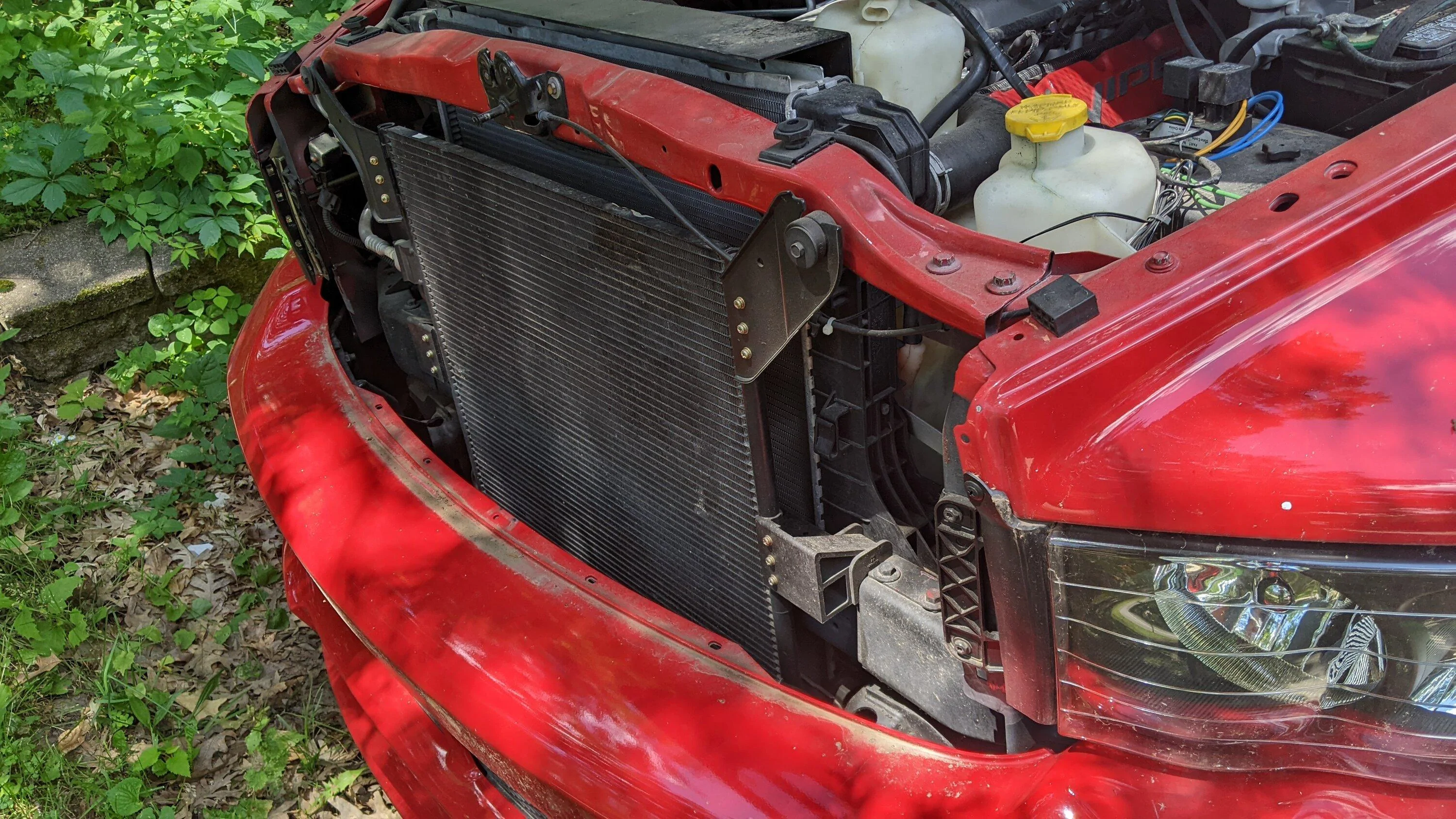
Jeep Gladiator Diesel cooling options and ideas PXL_20220701_181618702


Jeep Gladiator Diesel cooling options and ideas PXL_20220701_181618702~2


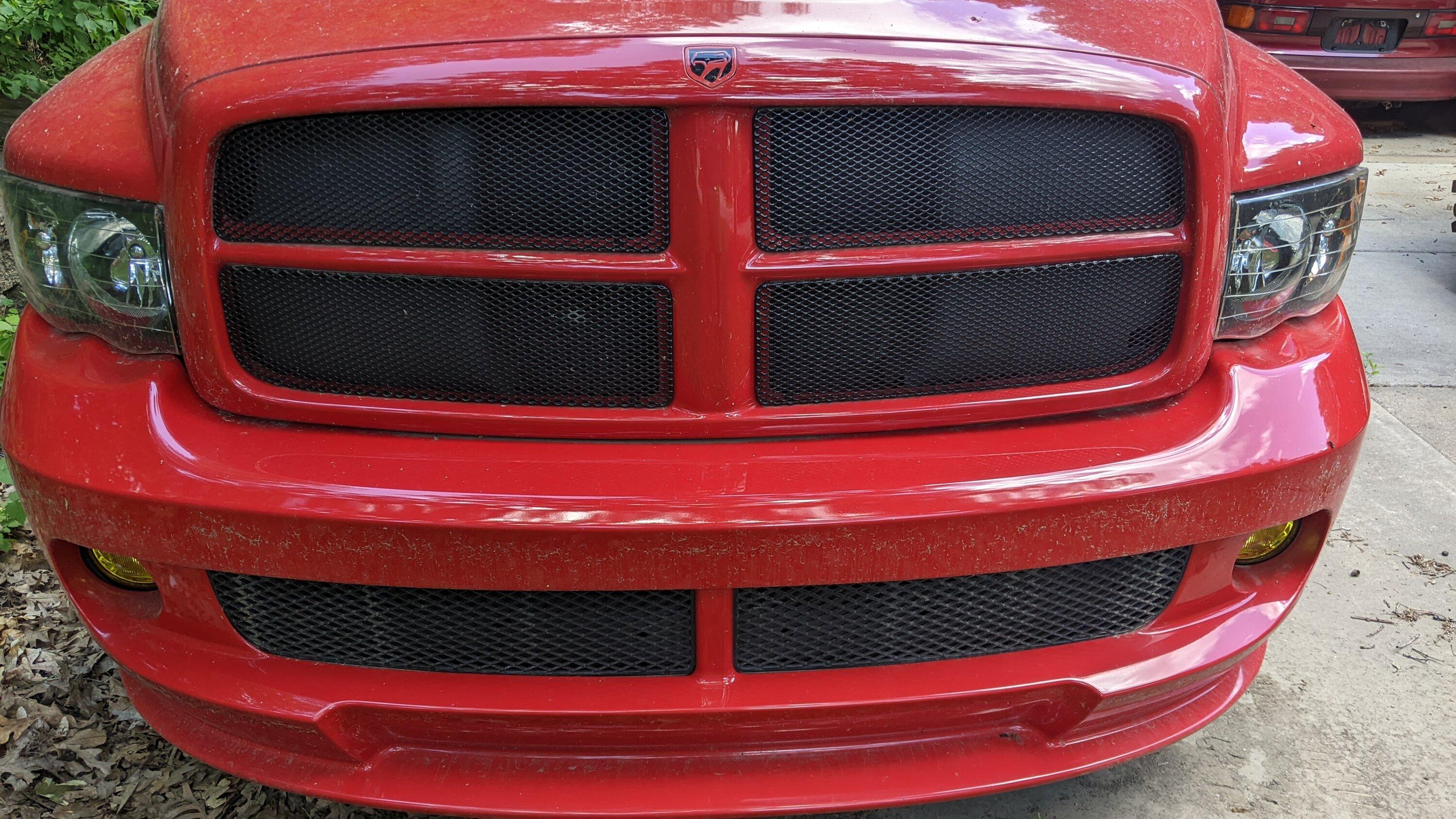
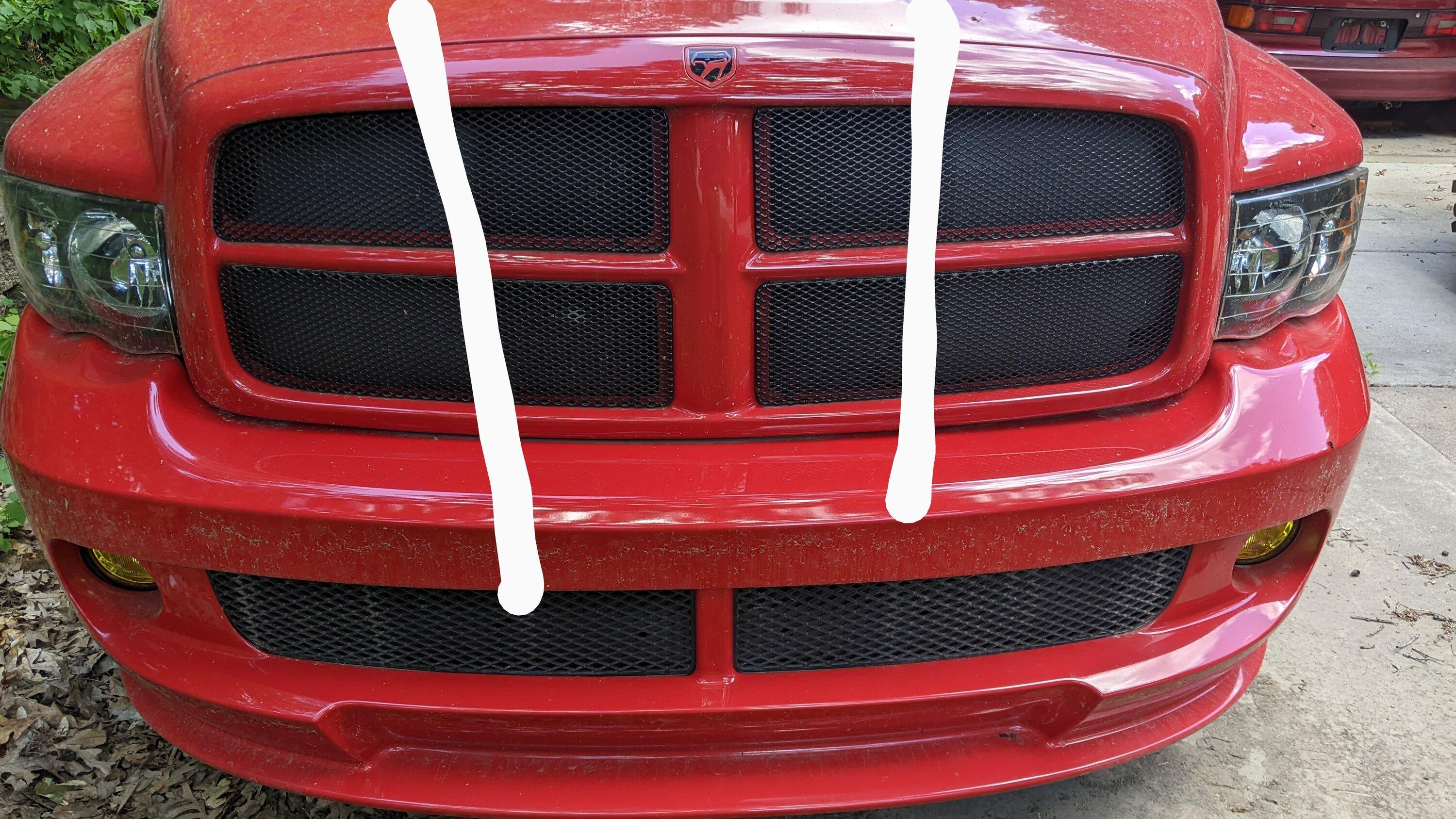
I know it's apples and oranges, gas vs diesel, but I've always been kind of surprised by how tight the ducting is at the front of my truck. Now I've never done extended track sessions but I've done autocross and repeated back to back runs at the drag strip, and even towing my wagoneer in 90°+ and high humidity, and it never gets above 215ish. Which is toasty, but controlled.

Just saying, despite my photoshopping, I agree frontal surface area isn't the primary issue in stock form.

Jeep Gladiator Diesel cooling options and ideas PXL_20220701_181730188
Sponsored


jsalbre

Well-Known Member
First Name
Jeremy
Joined
Mar 17, 2021
Threads
10
Messages
676
Reaction score
812
Location
Idaho
Vehicle(s)
‘21 Sarge Mojave, ‘21 VW Tiguan SEL-P RLine
Build Thread
Link
Occupation
Security Engineer, First Sergeant
PXL_20220701_181618702.jpg


PXL_20220701_181618702~2.jpg


I know it's apples and oranges, gas vs diesel, but I've always been kind of surprised by how tight the ducting is at the front of my truck. Now I've never done extended track sessions but I've done autocross and repeated back to back runs at the drag strip, and even towing my wagoneer in 90°+ and high humidity, and it never gets above 215ish. Which is toasty, but controlled.

Just saying, despite my photoshopping, I agree frontal surface area isn't the primary issue in stock form.

PXL_20220701_181730188.jpg
The engineers involved in designing the JT have said that frontal area (“packaging”) was the biggest problem. Look how much taller the radiator on that Ram is, and it goes below the grille, getting air from the openings in the bumper, whereas the JT doesn’t have any openings in the bumper.
 

BlueScapegoat

Well-Known Member
First Name
Trevor
Joined
Dec 2, 2018
Threads
14
Messages
1,114
Reaction score
2,713
Location
MN
Vehicle(s)
91 ST185, 04 Ram SRT10, 04 Forester XT, SC'd 05 Rubi, 22 JTRD
Occupation
Air Traffic Controller
Vehicle Showcase
4
The engineers involved in designing the JT have said that frontal area (“packaging”) was the biggest problem. Look how much taller the radiator on that Ram is, and it goes below the grille, getting air from the openings in the bumper, whereas the JT doesn’t have any openings in the bumper.
Sure, with their radiator limitations as being a factor as well. Everything is a factor in production. Kind of goes back to what I was saying two posts ago
 

1is2many

Well-Known Member
First Name
andrew
Joined
May 8, 2022
Threads
9
Messages
73
Reaction score
66
Location
Sin City
Vehicle(s)
2022 gladiator rubicon diesel
Occupation
Construction Planning Supervisor
There is a gladiator from grill assembly for $100 it’s the wrong color as mine but I was considering talking down as cheap as possible and modding it and testing temps against the stock one.
 

@californiajeeping

Well-Known Member
Joined
Apr 1, 2020
Threads
16
Messages
955
Reaction score
1,006
Location
California
Vehicle(s)
2022 Jeep Gladiator diesel, 1977 cj5 LS swapped
Took it up to 7000ft this weekend. Saw 247 on the oil temp. Above 230 it feels down on power I bet it starts cutting boost.
My intake temps were around 350 MAT not sure if mat is a real measurement or virtual. But either way that’s a lot of air temp!
 

Sponsored

CrazyCooter

Well-Known Member
First Name
Tony
Joined
Nov 1, 2020
Threads
11
Messages
2,310
Reaction score
2,564
Location
Far NorCal
Website
www.overlandvehicledynamics.com
Vehicle(s)
1991 JEEP YJ, 2021 JTR Ecodiesel
Occupation
Specialty Off Road Shop Owner
Took it up to 7000ft this weekend. Saw 247 on the oil temp. Above 230 it feels down on power I bet it starts cutting boost.
My intake temps were around 350 MAT not sure if mat is a real measurement or virtual. But either way that’s a lot of air temp!
That MAT has to be turbo outlet? No way they could feed 350° air into the engine and have it live...... I've been unable to find any other PID for IAT that shows a lower temp though.
 

@californiajeeping

Well-Known Member
Joined
Apr 1, 2020
Threads
16
Messages
955
Reaction score
1,006
Location
California
Vehicle(s)
2022 Jeep Gladiator diesel, 1977 cj5 LS swapped
That MAT has to be turbo outlet? No way they could feed 350° air into the engine and have it live...... I've been unable to find any other PID for IAT that shows a lower temp though.
Well.

it’s MAT manifold absolute temperature.I assume that is the true manifold temp. And yes it sees well over 250 on that data point regularly.
 

CrazyCooter

Well-Known Member
First Name
Tony
Joined
Nov 1, 2020
Threads
11
Messages
2,310
Reaction score
2,564
Location
Far NorCal
Website
www.overlandvehicledynamics.com
Vehicle(s)
1991 JEEP YJ, 2021 JTR Ecodiesel
Occupation
Specialty Off Road Shop Owner
Well.

it’s MAT manifold absolute temperature.I assume that is the true manifold temp. And yes it sees well over 250 on that data point regularly.
I understand what you are reporting, but it just seems way higher than any other vehicle I have monitored. My Cummins would read 20-40° higher than ambient, but maybe the CAC sucks just like the cooling system?
 

Rusty PW

Well-Known Member
First Name
Russ
Joined
Jan 10, 2022
Threads
37
Messages
11,373
Reaction score
30,349
Location
Fayette Nam, Pennsyltucky
Website
www.youtube.com
Vehicle(s)
'22 JTRD, '11 370Z Nismo, '07 Honda VFR
Build Thread
Link
Occupation
Muff Diver
Well.

it’s MAT manifold absolute temperature.I assume that is the true manifold temp. And yes it sees well over 250 on that data point regularly.
If that is the air temp coming out of the intercooler. No wonder it's derating.
 

@californiajeeping

Well-Known Member
Joined
Apr 1, 2020
Threads
16
Messages
955
Reaction score
1,006
Location
California
Vehicle(s)
2022 Jeep Gladiator diesel, 1977 cj5 LS swapped
If that is the air temp coming out of the intercooler. No wonder it's derating.
I played around with the idash. It also has iat 1 and iat 2 those read between 110-140.

not sure why the MAT reads the pre intercooler temps?

seems like 140 would be more realistic.
 

Sponsored

TheDantee

New Member
First Name
Dante
Joined
May 6, 2021
Threads
0
Messages
1
Reaction score
1
Location
Ontario, Canada
Vehicle(s)
2014 Mercedes Sprinter 170
Now that summer is here, it is clear that the Diesel Gladiators will get hot if you push them ( towing ), and a LOT of us are pissed about it. Before I sell mine I want to do everything I can to see if I can make something work.

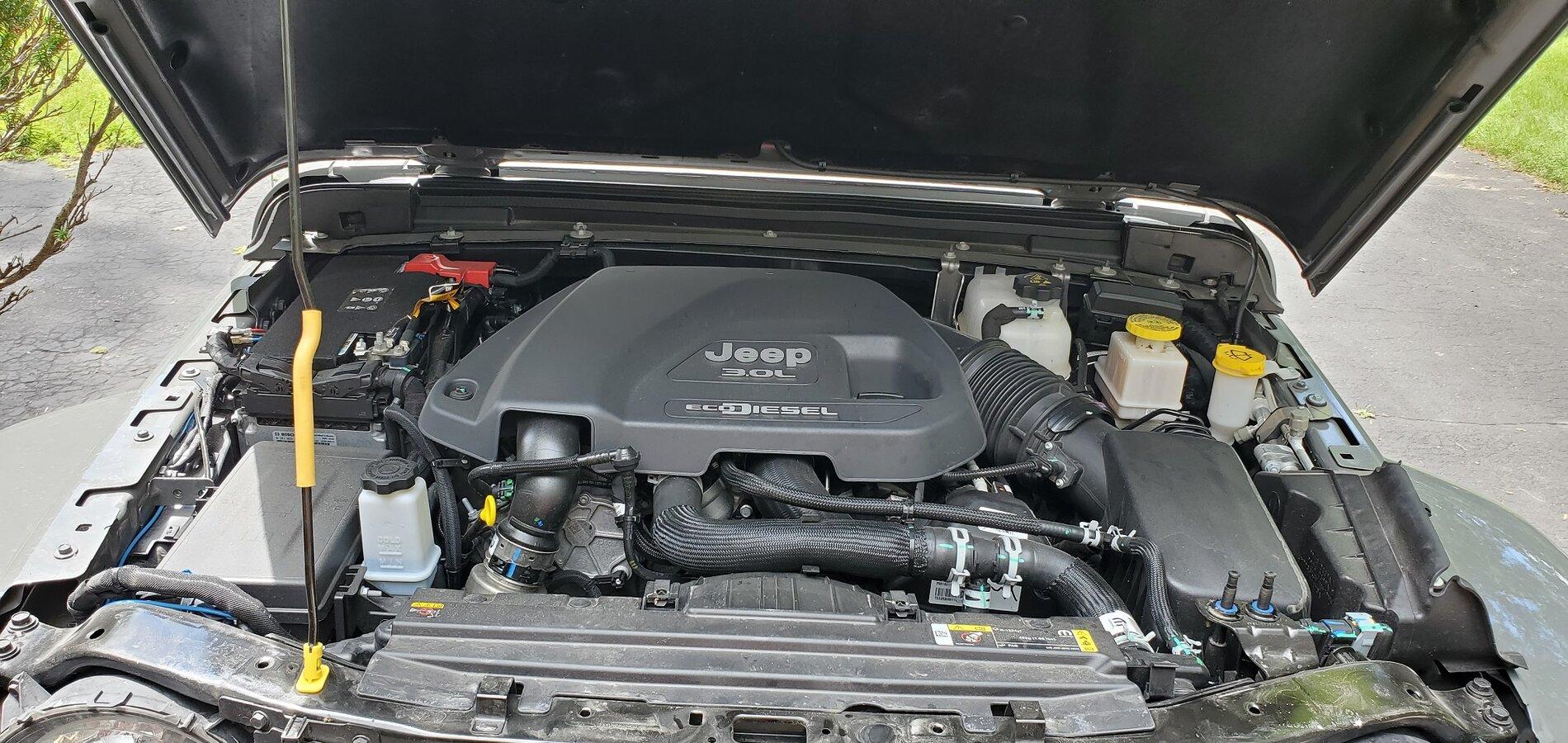
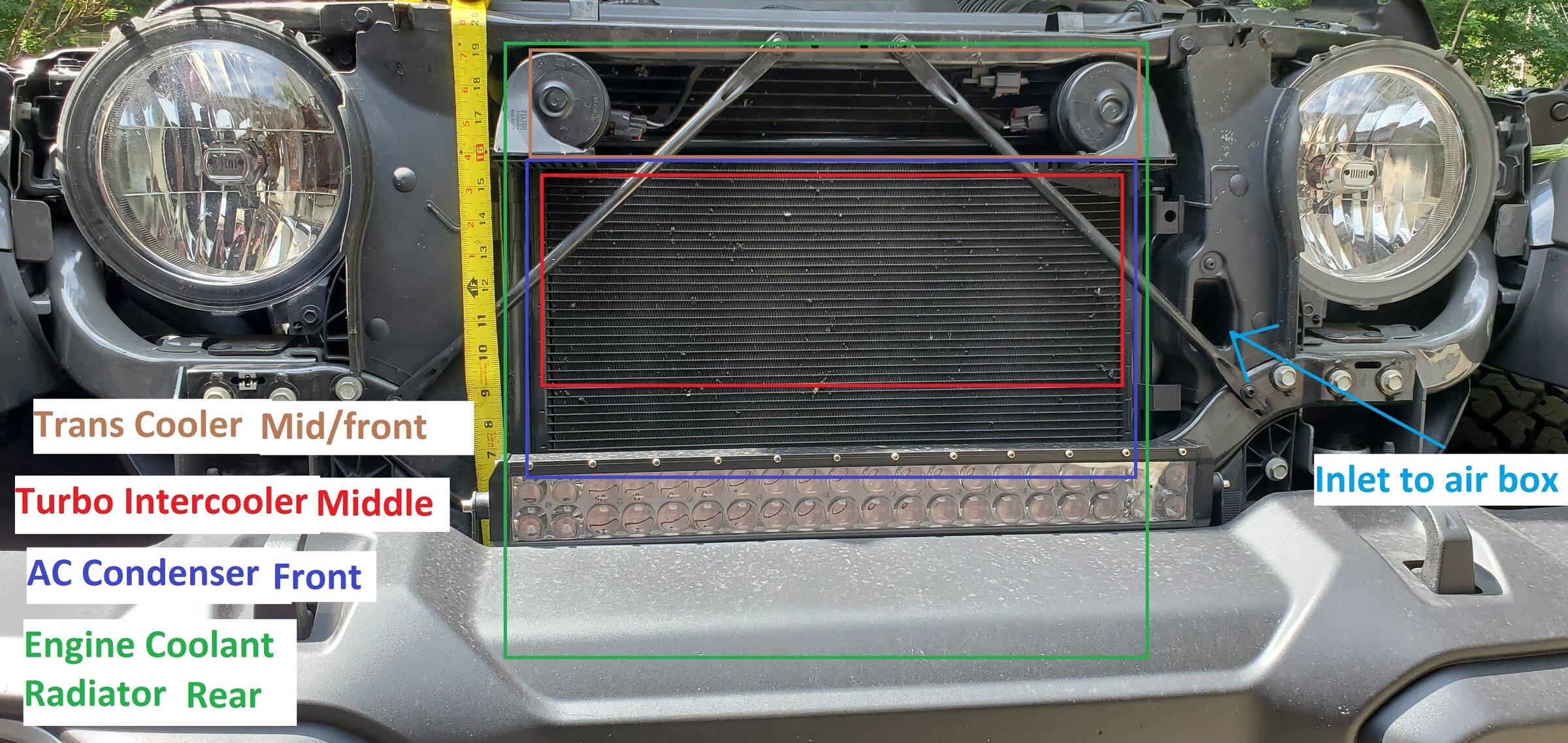
We have all heard FCA mention that the 3.0L was limited by its cooling and that is likely because they were not going to redesign the front end. Once I started dissecting mine it was clear there are plenty of issues with this current setup.
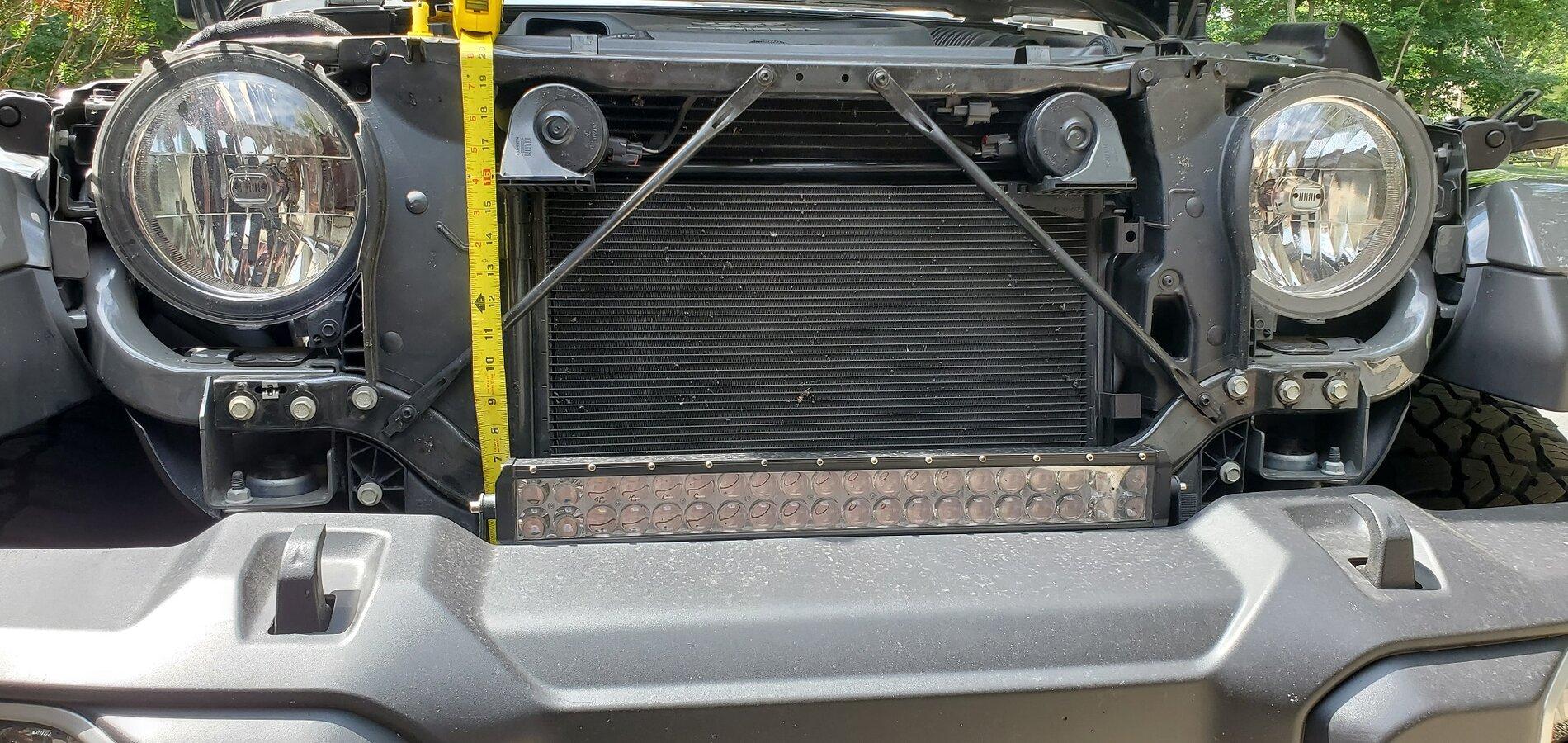
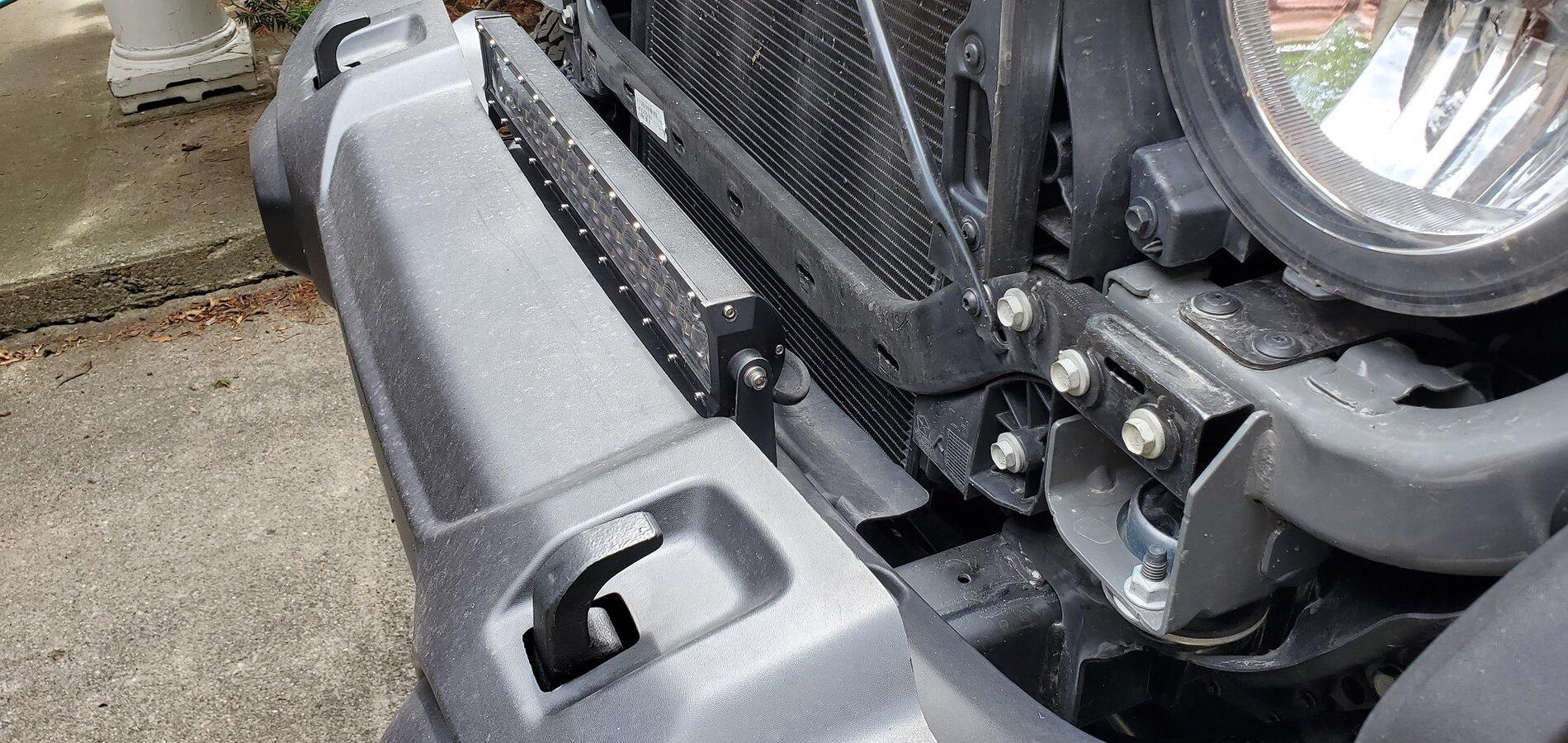
First off all the bottom 6" of the radiator is blocked by the plastic bumper.
Second, the horns should go somewhere else. Why block perfectly good airflow
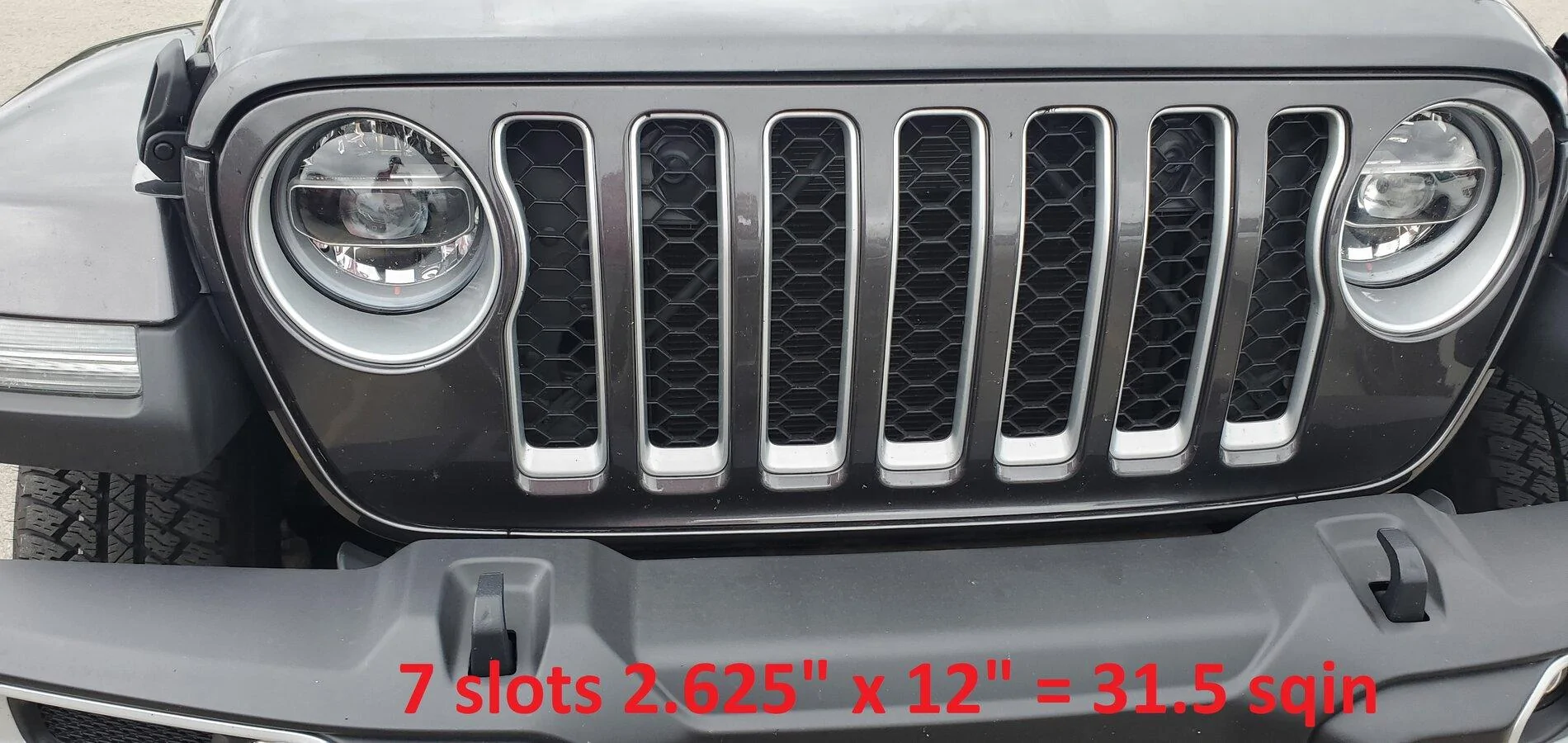
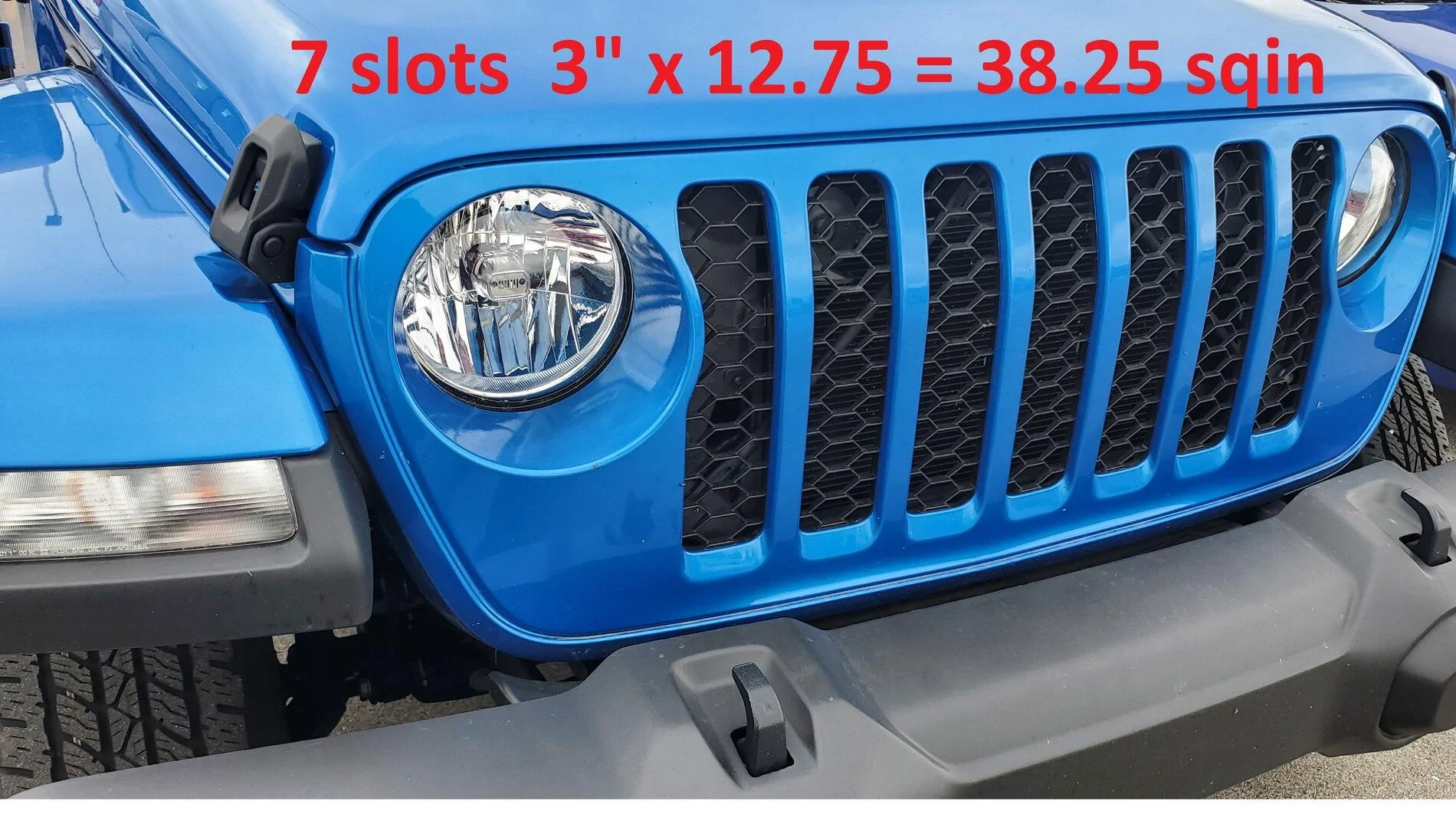
Third, there are multiple types of grills that may help air flow. The Overland and Rubicon grills have decorative bezels that narrow the slots. The Sports and black grill option have narrow slots which adds 15% area.

The next hot day I get I am going to do a 30 mile out and back trip and document my Engine Coolant, Oil Temp, Trans Temp, and add another thermocouple under the hood somewhere. I will be towing my 5600 lb camper and try to hold 70mph.

Test 1 - Remove the grill completely and compare.
Test 2 - If changes were not significant I will add to it by cracking the hood open with spacers and straps to hold it in place. Hopefully it will allow more air movement around the engine.

From here I think the results will determine if grill modifications or hood vends will do anything and what the best case scenario would be. If either work I will consider removing the front bumper.

To get an idea of "best case" I would say start looking at the RAM eco diesel forums. They have much bigger radiators and the engine is basically the same. If they are doing well and not having towing issues than maybe we can hope for that. If they are also struggling with overheating while towing than it will be a sign to sell and move on ?.

I would like to keep this thread solution based if possible so if you have any ideas, lets get testing.


Radiator.jpg


Overland grill.jpg


Sport grill.jpg


engine.jpg


side.jpg


layout.jpg


20220220_160029.jpg
Why not just add a hood louver like people used to do with the TJs wouldnt that help get the hot air out?

https://shop.poisonspyder.com/JT-JL-Hood-Louver-Black-PC-p/19-53-010p1.htm

Also could start looking for some vented inner fender liners

https://evomfg.com/collections/inne...jt-diesel-front-vented-aluminum-inner-fenders

This one doesnt have a huge vent better to find something like this

https://shop.poisonspyder.com/JT-JL-Front-Inner-Fender-Kit-Vented-Black-p/19-02-980vp1.htm

However idk if that works with the diesel. Having less heat trapped in the engine bay will lower your temps more than you may think.
 

rubicon4wheeler

Well-Known Member
First Name
Geoff
Joined
Jan 1, 2022
Threads
1
Messages
228
Reaction score
373
Location
Sierra Nevada, California
Vehicle(s)
2022 Gladiator Rubicon Diesel
Occupation
Safety Supervisor
It's not the grill. It's been tested. People have pulled them off completely, went back to tow, and had the same engine and oil temps.
To make the heat exchangers work, It's not just about getting air into the engine compartment; it also requires evacuating that air so that more cool air can flow through the exchangers. Modern engine bays are stuffed to the gills with all sorts of engine stuff, so there is not much room for air movement. Auto manufactures are very concerned with mitigating noise, so they have to modify where air (and noise) is permitted to flow. With the hood sealed against the cowl and fenders to silence the engine and turbo noise, the only place for hot, pressurized underhood air to go is down through the inner fenders and underneath the engine, creating a bottleneck and a restriction to the airflow through the grille.

In addition to modifying my OEM Rubicon hood vents to be functional, I also removed the foam hood-to-cowl silencers to give the hot underhood air another path to release pressure and allow additional ram-air through the grille. This really increased the volume of the turbo whistle when on boost, so it's clearly made some sort of difference in airflow. Coming off the freeway and stopping while the engine fan is running, I have a ton of heat pouring out of the now-functional hood vents and cowl seam, so I'm happy with the results. I don't have a FLIR or fluid dynamics modeling software, but I can tell you that I have had no temperature issues whatsoever while towing my Escape 21 camper up hills in sunny California even with my Derringer on level 6.
 

woffman5

Active Member
First Name
Jacob
Joined
Mar 4, 2022
Threads
2
Messages
39
Reaction score
39
Location
San Diego, CA
Vehicle(s)
2021 JTRD, 2021 JLU 4xe
Occupation
U.S. Navy LDO (Nuclear Power)
To make the heat exchangers work, It's not just about getting air into the engine compartment; it also requires evacuating that air so that more cool air can flow through the exchangers. Modern engine bays are stuffed to the gills with all sorts of engine stuff, so there is not much room for air movement. Auto manufactures are very concerned with mitigating noise, so they have to modify where air (and noise) is permitted to flow. With the hood sealed against the cowl and fenders to silence the engine and turbo noise, the only place for hot, pressurized underhood air to go is down through the inner fenders and underneath the engine, creating a bottleneck and a restriction to the airflow through the grille.

In addition to modifying my OEM Rubicon hood vents to be functional, I also removed the foam hood-to-cowl silencers to give the hot underhood air another path to release pressure and allow additional ram-air through the grille. This really increased the volume of the turbo whistle when on boost, so it's clearly made some sort of difference in airflow. Coming off the freeway and stopping while the engine fan is running, I have a ton of heat pouring out of the now-functional hood vents and cowl seam, so I'm happy with the results. I don't have a FLIR or fluid dynamics modeling software, but I can tell you that I have had no temperature issues whatsoever while towing my Escape 21 camper up hills in sunny California even with my Derringer on level 6.
So, I'm gonna ask the dumb question here. Can you snap a photo of the where this piece of foam is on the cowl?
 

NC_Overland

Well-Known Member
First Name
John
Joined
Feb 21, 2020
Threads
18
Messages
3,377
Reaction score
4,141
Location
Raleigh, NC
Vehicle(s)
2020 JT Overland
Which makes a lot of sense to me, I bet if you opened the whole grill up and ducted it to the radiator your limiting factor would be extracting air from the other side.

Removing all the grill including the surrounding material would be detrimental, the air needs directed, not allowed to hit the resistance of the grill and the high pressure area in front of it, and flow around.

But something like the larger slot grill at the front with tight ducting, a better aluminum radiator, and a reverse cowl hood would all work quite well together I think.
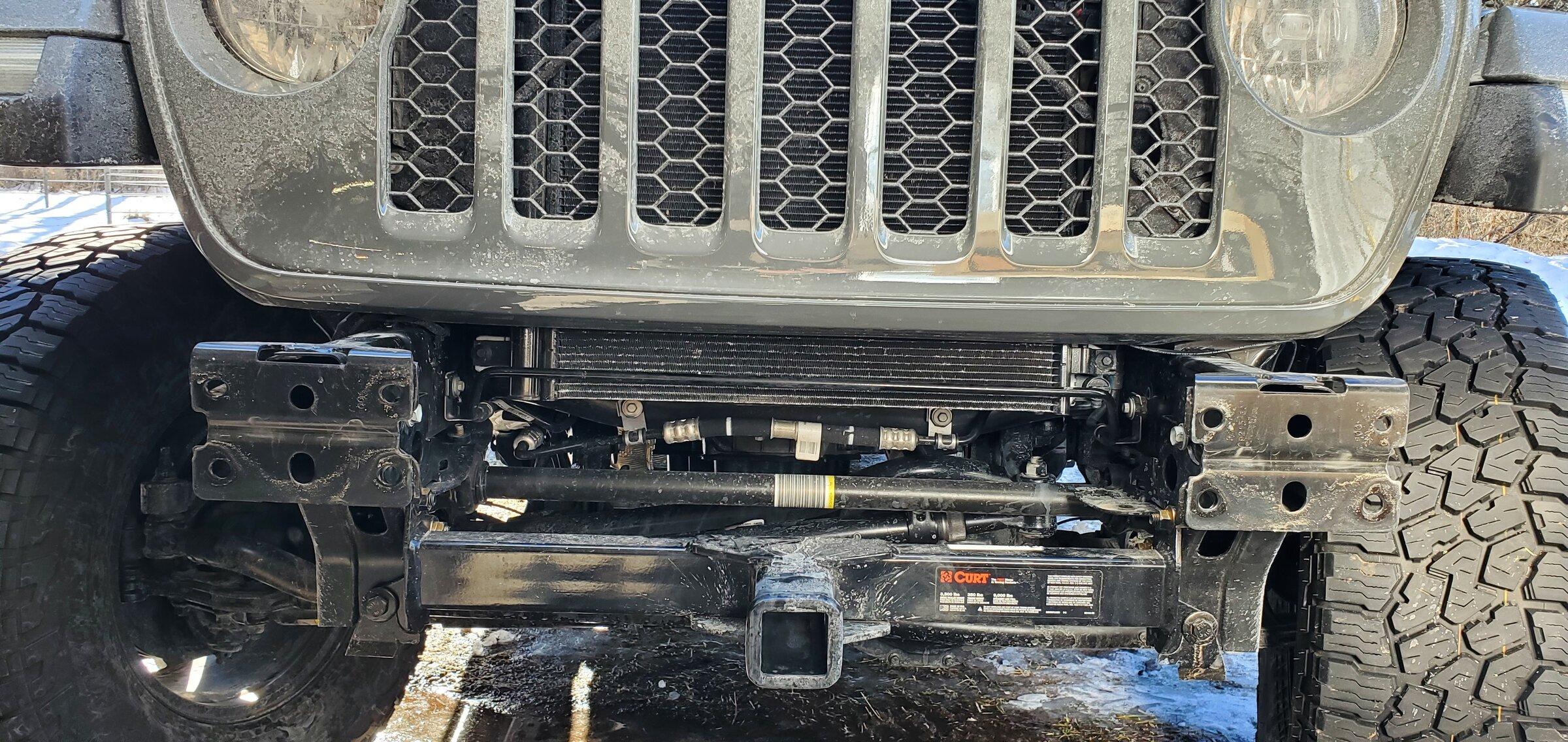
That brings up a good point. I wonder how many people with cooling issues have removed the removed the factory front skid plate or splash shields (model dependent). I’m not sure if the Jeep engineers designed that to help direct airflow to the radiator. I’ve had a few GM trucks that state in the owner’s manual that removing them could cause cooling issues. May or may not be a factor, but that comment triggered that in my brain.

My apologies if this has been previously discussed. I haven’t read every post in the 43 pages.
 

CrazyCooter

Well-Known Member
First Name
Tony
Joined
Nov 1, 2020
Threads
11
Messages
2,310
Reaction score
2,564
Location
Far NorCal
Website
www.overlandvehicledynamics.com
Vehicle(s)
1991 JEEP YJ, 2021 JTR Ecodiesel
Occupation
Specialty Off Road Shop Owner
That brings up a good point. I wonder how many people with cooling issues have removed the removed the factory front skid plate or splash shields (model dependent). I’m not sure if the Jeep engineers designed that to help direct airflow to the radiator. I’ve had a few GM trucks that state in the owner’s manual that removing them could cause cooling issues. May or may not be a factor, but that comment triggered that in my brain.

My apologies if this has been previously discussed. I haven’t read every post in the 43 pages.
My truck is all stock as delivered with OEM steel bumper, Z10S winch and Mopar low winch guard installed. Has factory skid plate still installed.
Sponsored


Top