Sponsored

Diesel cooling options and ideas

tjZ06

Active Member
First Name
TJ
Joined
Jul 7, 2021
Threads
1
Messages
30
Reaction score
48
Location
Palo Alto, CA
Vehicle(s)
'03 JGC Overland 4.7 HO, '18 JGC Trackhawk 6.2 SC
Occupation
Tech
The thermostat also controls the amount of time the coolant is in the radiator to cool off
Yes, but it's a closed system so the longer some coolant stays in the radiator to cool off, the longer other coolant is staying in the engine and taking in more heat. It's sort of a zero-sum game.

Newton's Law of Cooling states that you want the biggest heat differential between the coolant and the ambient air for the most effective cooling (that's a gross over-simplification, but sort of the net-net). Obviously we can't control ambient temp, so you kind of want the coolant entering the radiator as hot as possible... so slowing coolant down sounds good. But again, it's a closed system so that means the coolant going back into the engine is that much cooler, so even though it gains more heat with the increased time in the engine, the net-temp coming out would be about the same. In other words, to a reasonable extent coolant flow isn't super important. Too fast and it'll cavitate in places and become inefficient, too slow and it will reach unacceptable temps while in the engine (even thought the coolant in the radiator might be fine). It's generally accepted you want it flowing as fast as possible, before creating cavitation.

-TJ
Sponsored
 

tjZ06

Active Member
First Name
TJ
Joined
Jul 7, 2021
Threads
1
Messages
30
Reaction score
48
Location
Palo Alto, CA
Vehicle(s)
'03 JGC Overland 4.7 HO, '18 JGC Trackhawk 6.2 SC
Occupation
Tech
20210712_164740.jpg
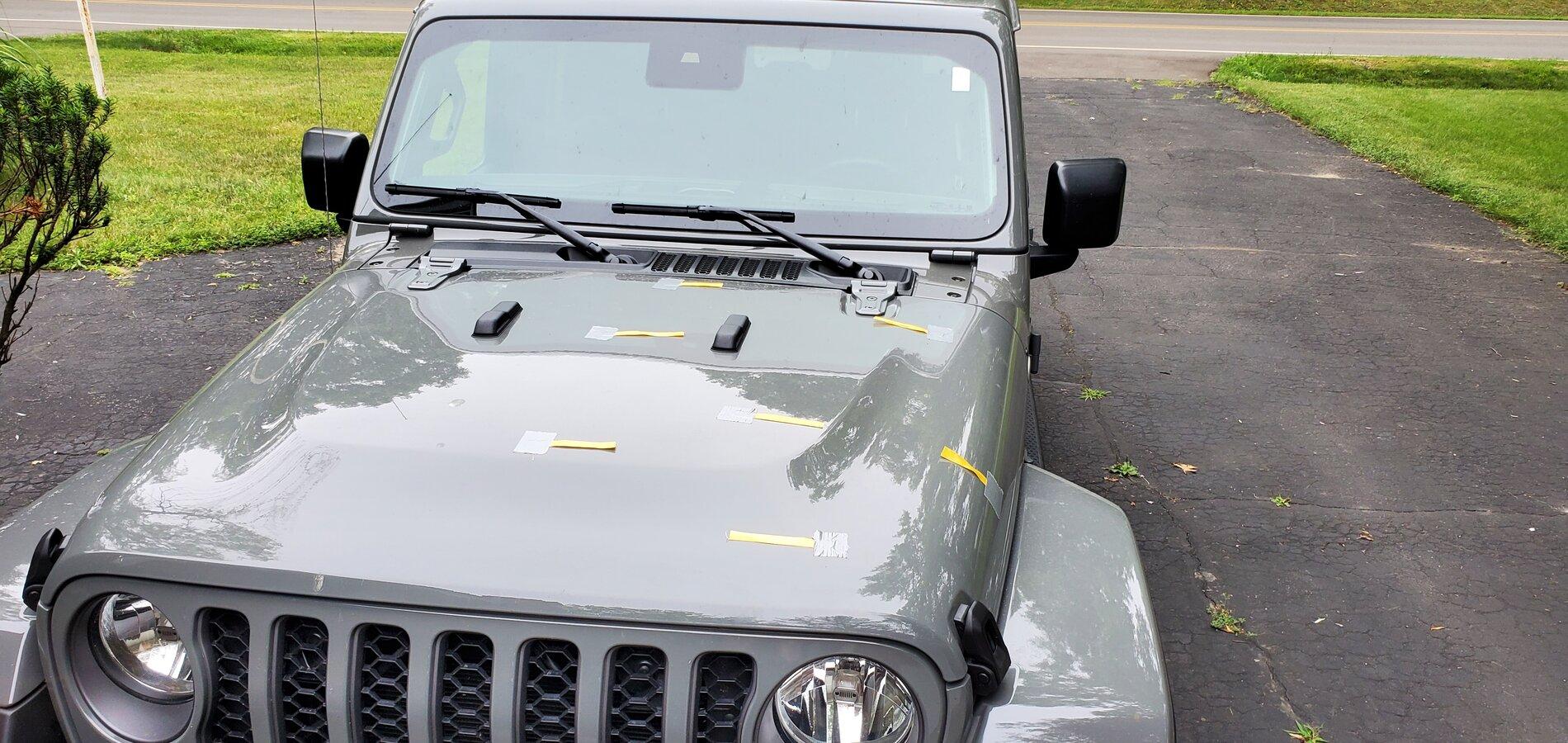
This is how I will determine where to put hood vents or louvers. The ribbon on the front flapps the fastest so something across the front (scoping back towards the windshield) would draw out the most heat. Up near the windshield you can see it doesn't know what direction to go.
Thanks for putting in the work to collect this data for us. Your findings confirm what I would have expected, and I agree the most effective place for vents would be the forward area of the hood.

-TJ
 

CLM

Active Member
Joined
Jun 21, 2021
Threads
2
Messages
26
Reaction score
33
Location
Georgia, USA
Vehicle(s)
2021 Gladiator Rubicon 3.0 Diesel Sting Gray
Was this on a diesel? I know the Diesel has a washer tank that interferes and some work and some dont and can be complicated to install. I have been looking at getting these or the smittybuilt.
Yes, it's a diesel. Yes, they are difficult to install. A certain amount of bending, rerouting, drilling, and cursing are needed. In the rear, there is a frame bracket that must be whacked with a sledge hammer to bend it out of the way. They are very nicely made, better quality that some others I'm sure. They are difficult to install, if you want a guaranteed perfect fit in 30 minutes don't buy these.
 

ShadowsPapa

Well-Known Member
First Name
Bill
Joined
Oct 12, 2019
Threads
247
Messages
40,442
Reaction score
53,858
Location
Runnells, Iowa
Vehicle(s)
'25 JTMX, '23 JLU 4xe, '82 SX4, '73 Javelin
Occupation
Retired auto mechanic, frmr gov't ntwrk security admin
Vehicle Showcase
3
Yes, but it's a closed system so the longer some coolant stays in the radiator to cool off, the longer other coolant is staying in the engine and taking in more heat. It's sort of a zero-sum game.

Newton's Law of Cooling states that you want the biggest heat differential between the coolant and the ambient air for the most effective cooling (that's a gross over-simplification, but sort of the net-net). Obviously we can't control ambient temp, so you kind of want the coolant entering the radiator as hot as possible... so slowing coolant down sounds good. But again, it's a closed system so that means the coolant going back into the engine is that much cooler, so even though it gains more heat with the increased time in the engine, the net-temp coming out would be about the same. In other words, to a reasonable extent coolant flow isn't super important. Too fast and it'll cavitate in places and become inefficient, too slow and it will reach unacceptable temps while in the engine (even thought the coolant in the radiator might be fine). It's generally accepted you want it flowing as fast as possible, before creating cavitation.

-TJ
My thoughts as well - when I was running grain drying equipment that was a factor. The greater the difference in temperature the more heat energy that's moved in the same time period.
I think what you mentioned was also likely part of the study/TSB I mentioned.
 

CLM

Active Member
Joined
Jun 21, 2021
Threads
2
Messages
26
Reaction score
33
Location
Georgia, USA
Vehicle(s)
2021 Gladiator Rubicon 3.0 Diesel Sting Gray
20210712_164740.jpg
This is how I will determine where to put hood vents or louvers. The ribbon on the front flapps the fastest so something across the front (scoping back towards the windshield) would draw out the most heat. Up near the windshield you can see it doesn't know what direction to go.
From the drivers view, the yellow ribbon on the left nearest the windshield looks pretty good to me. Also hot air rises, and high pressure moves toward low pressure. You have high velocity low pressure cold air across most of the hood. Seems like the Rubicon hood vents should work if they were actually open.
 

Sponsored

Pike1892

Active Member
First Name
Jason
Joined
Jul 8, 2021
Threads
2
Messages
29
Reaction score
34
Location
Salt Lake CIty, Utah
Vehicle(s)
2021 Gladiator Rubicon Eco Diesel
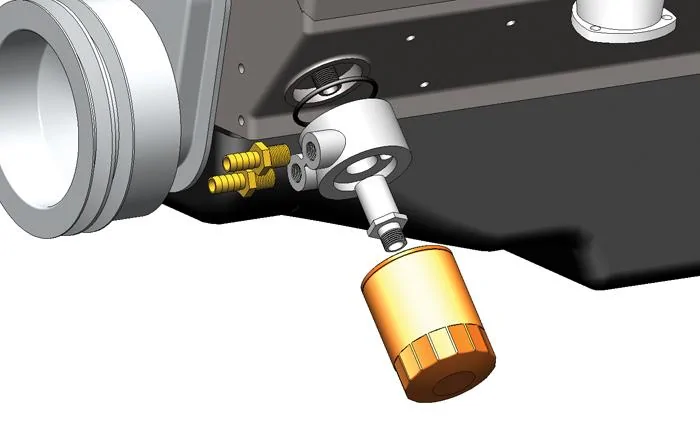
If it were me, I would probably hook the oil cooler to the return line of the turbo. You wouldn't have as much volume as elsewhere, but you would get the hottest oil in the system into a cooler before it had a chance to return to the block. This would definitely help with the longevity of the oil and keep from putting heat back into an already hot system.
This is the universal setup I use to help cool oil in my aircooled cars, I do not see why it wouldn't work on this. It is a sandwich plate that is thermostatically controlled, then you run lines to a cooler with a fan in another location and add an inline thermostatic switch that kicks the fan on that is mounted to the cooler. I ran a 180 degree sandwich, 190 degree fan switch on my VWs and it helps a ton.

Jeep Gladiator Diesel cooling options and ideas 15405-Illustration
 
OP
OP
jeepin48

jeepin48

Well-Known Member
First Name
Jake
Joined
Sep 10, 2020
Threads
10
Messages
418
Reaction score
437
Location
Michigan
Vehicle(s)
JT Overland 3.0L
Occupation
Engineer
From the drivers view, the yellow ribbon on the left nearest the windshield looks pretty good to me. Also hot air rises, and high pressure moves toward low pressure. You have high velocity low pressure cold air across most of the hood. Seems like the Rubicon hood vents should work if they were actually open.
I agree if the Rubicon vents were open it would help. IMO the best ones were posted earlier and come with plugs that would keep water out if it were raining. I want to reach out to that company and see if they will work on the flat sections of the non-rubicon hood.
 

redrider

Well-Known Member
First Name
Joe
Joined
Apr 29, 2019
Threads
5
Messages
596
Reaction score
891
Location
Columbia
Vehicle(s)
1 truck 5 motorcycles
The vid with strips was revealing and I admit the air flow at the front was better than I had erroneously imagined. The forward facing Mojave vent, if opened, may be a negative in that it adds pressure to the engine bay and reduce flow through the radiator. Vented hoods and cowlings are not new so for those with them, is the water intrusion a problem? Smart folks will come along shortly.
 

Abnmarine

Well-Known Member
First Name
David
Joined
Feb 2, 2021
Threads
6
Messages
139
Reaction score
203
Location
Florida
Vehicle(s)
2021 Overland
Occupation
Retired
I’ve been following this post and appreciate all of the information. I’m currently towing my 3,800 lb camper from Florida to Moab and stopped for a couple of days in the middle of Texas. I haven’t yet experienced any overheating but haven’t yet hit the mountains or the high temps. Highest that I’ve seen has been:

Coolant: 226 degrees
Oil: 240 degrees
Trans: 210 degrees

This was also the case few weeks ago when temps were 95 degrees in the NC mountains.

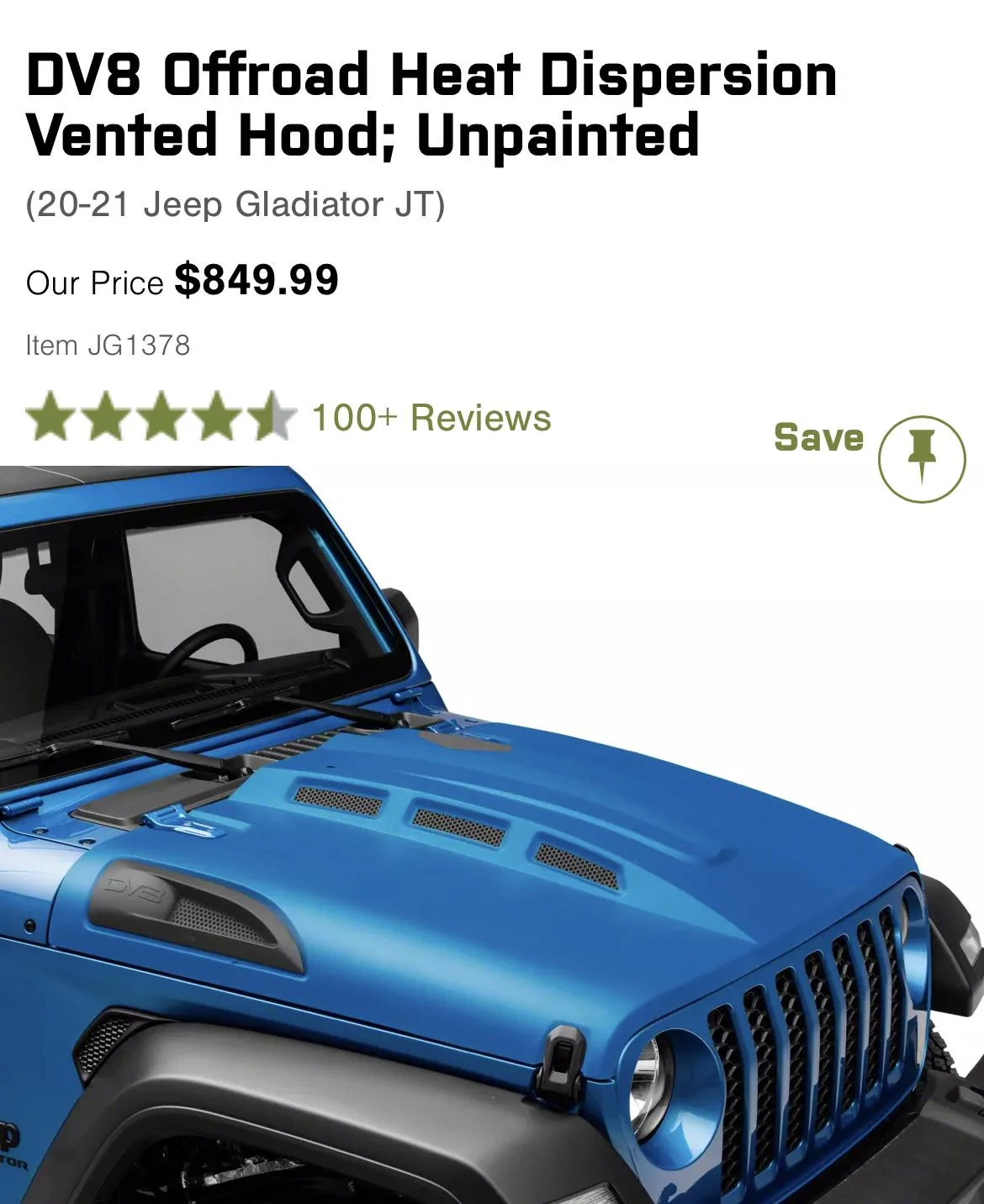
I feel that the transmission has sufficient cooling but the oil and engine could be improved. I’ve thought about the DV8 hood since I have the Overland model without the hood vents. Any thoughts on if it would actually help get the heat out under the hood?

Jeep Gladiator Diesel cooling options and ideas 18B70584-0AA5-4622-8A21-1C9531EE526B
 

Bonanza

Well-Known Member
Joined
Apr 22, 2020
Threads
41
Messages
829
Reaction score
1,316
Location
Southern CA
Vehicle(s)
Sport S Max Tow Punk'n
I agree if the Rubicon vents were open it would help. IMO the best ones were posted earlier and come with plugs that would keep water out if it were raining. I want to reach out to that company and see if they will work on the flat sections of the non-rubicon hood.
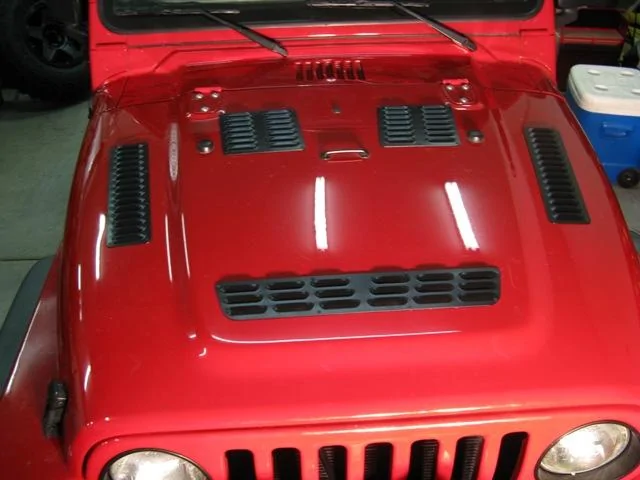
Genright has offered universal louver strips for a long time. I used them on my last 2 jeeps and loved them. I would have done them again on my JT, but I have a gas engine and I feel the HD cooling is better than the JKs so I'm not too worried yet. I live in the desert so it gets hot a lot.

My personal need/want for passive cooling is sitting on a trail with the engine running. For towing, a passive vent isn't --that-- helpful where the rubicon vents are located. Meaning, at speed the pressure zones both over the hood and under the hood are turbulent and vary greatly. A vent is of course useful, but not as useful as allowing heat to escape when the only source of airflow is the fan.

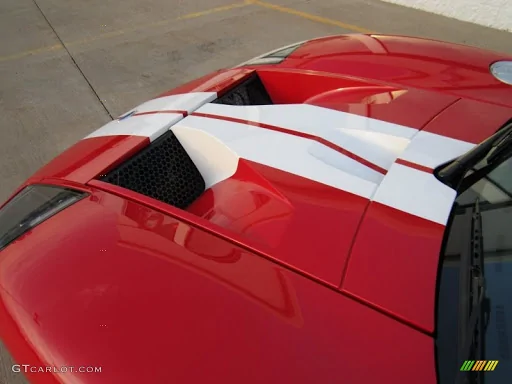
Most racecars have naca type ducts directly behind and above the forward mounted radiators. That is, nearly universally, the best place for a vent designed to cool the actual engine at speed. Like the above video shows, the pressure zones at the front of the hood are still ideal, and don't suffer from the reverse flow found at the base of the windshield.

Below is a good example. Minus the vents near the cowl, the front vent is IDEAL for radiator cooling.
Jeep Gladiator Diesel cooling options and ideas jeep-hood-5-jpg

Jeep Gladiator Diesel cooling options and ideas L3w1m_qetSv9m9b4-h5jn7YGtpM-Yxf5vs_IHgfE5XSmMcjA75
 

Sponsored

MPMB

Well-Known Member
First Name
Michael
Joined
Apr 30, 2021
Threads
12
Messages
1,820
Reaction score
2,716
Location
Utah
Vehicle(s)
'21 JTR - SG
Occupation
Check your inbox.
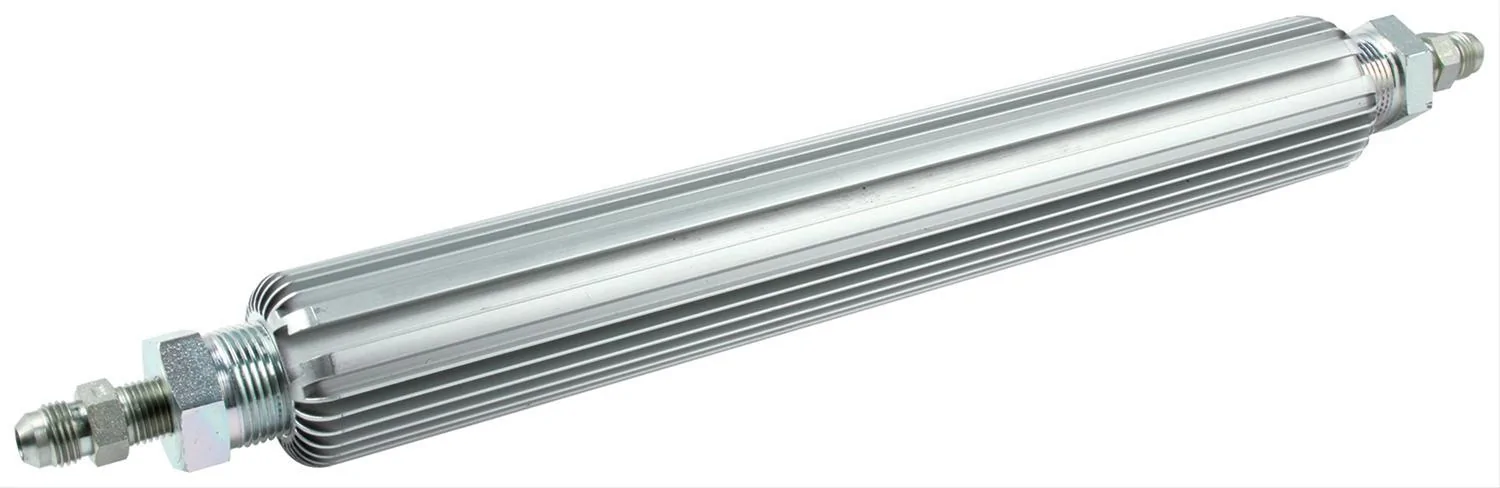
I haven't inspected the plumbing, but if one were to spend a lot of time building their own oil lines, one cooling option would be cool tubes. They come in various lengths. We ran 4' tubes on the racecar back to the dry sump tank.

Jeep Gladiator Diesel cooling options and ideas aaf-all52100_xl
 

ratherbskiing

Well-Known Member
Joined
Feb 24, 2020
Threads
1
Messages
45
Reaction score
45
Location
Utah + PA
Vehicle(s)
JTR+JLUWD
I LOVED my 3.0. It's all I would talk about whenever anyone asked about my Jeep. When it's less than 85 degrees out, it has unlimited power. However, it really shits the bed when towing in the summer heat. Add in long western grades, steep passes, head winds, or high elevation and I'm worried that I have a 3 season tow-rig. I think I'd be fine back east, but here in Utah the elements and topography are a lot to overcome. :(


Jeep Gladiator Diesel cooling options and ideas Screen Shot 2021-07-13 at 9.49.54 AM
 
First Name
John
Joined
Jul 13, 2021
Threads
0
Messages
19
Reaction score
15
Location
Indiana
Vehicle(s)
2021 JTRD
Working on a JTRD order with Gupton now and starting to get nervous reading all of this. It looks like most of the issues are at altitude. Is anyone experiencing these same overheating issues closer to sea level?
 

yolo

Well-Known Member
First Name
Keith
Joined
Nov 25, 2020
Threads
2
Messages
61
Reaction score
140
Location
Texas
Vehicle(s)
2021 Gladiator Rubicon (Diesel)
Occupation
Software Engineer

CrazyCooter

Well-Known Member
First Name
Tony
Joined
Nov 1, 2020
Threads
11
Messages
2,304
Reaction score
2,557
Location
Far NorCal
Website
www.overlandvehicledynamics.com
Vehicle(s)
1991 JEEP YJ, 2021 JTR Ecodiesel
Occupation
Specialty Off Road Shop Owner
Working on a JTRD order with Gupton now and starting to get nervous reading all of this. It looks like most of the issues are at altitude. Is anyone experiencing these same overheating issues closer to sea level?
Elevation doesn't matter, it's the ambient temp and load the engine is under. I overheated climbing out of Death Valley where the climb started below sea level.
Sponsored


Top